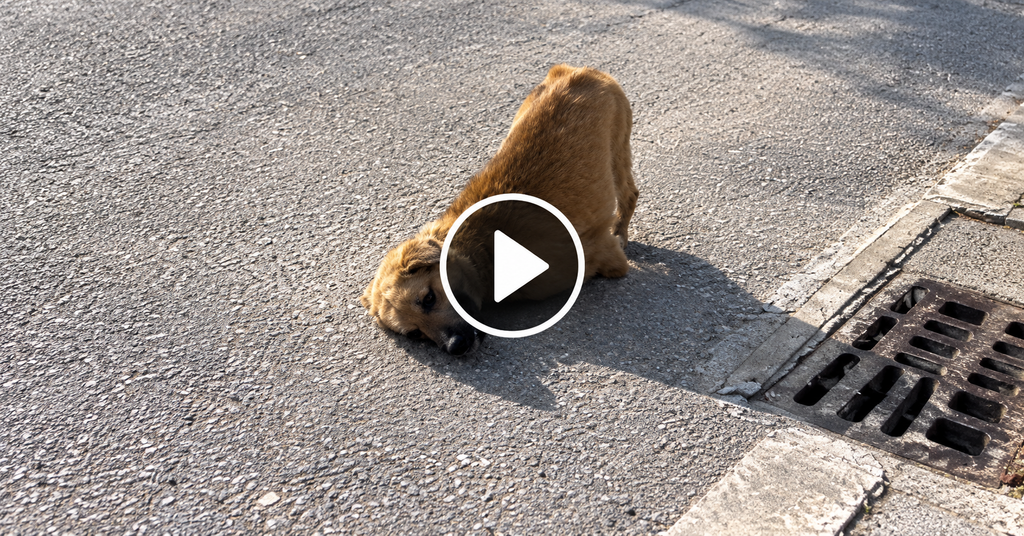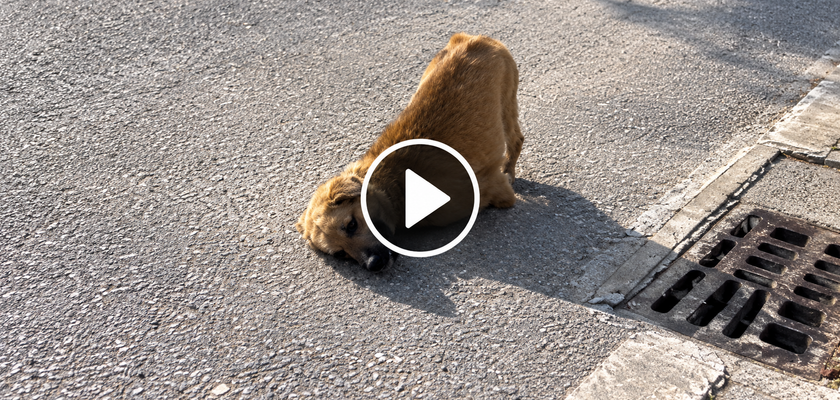
A dog making its way along a busy road has drawn attention to the challenges faced by vulnerable animals living without clear protection or care. In a video shared online, the dog appears to move slowly, using its body to help support its movement as vehicles pass along the roadway. The sight is concerning because the animal seems to have difficulty walking normally, making the surrounding traffic an additional source of danger. Although its background remains uncertain, the situation highlights why dogs experiencing mobility problems need patience, appropriate medical attention, and a safe place where they can recover without unnecessary risks.
The road appears to be an active public thoroughfare, with vehicles moving through the area while the dog continues forward. Rather than walking confidently on all four legs, the animal seems to struggle with each movement, taking one step at a time. Its slow progress makes the journey look particularly difficult in a place where traffic conditions can change quickly. For viewers who care about animal welfare, the scene raises an immediate concern about how the dog might reach a safer location and receive the help it may need.
According to the information accompanying the video, the dog’s legs had previously undergone surgery. However, the specific medical condition, the type of procedure, and the date of treatment are not established by the available information. Previous surgery can sometimes be followed by a lengthy recovery, and some animals may continue to experience mobility limitations because of their underlying condition. Without a veterinary examination and reliable medical records, it is impossible to determine precisely why this particular dog is moving in such a difficult manner.
One of the most troubling aspects of the situation is the dog’s proximity to moving vehicles. Roads are unpredictable environments for any animal, but they can be especially hazardous for a dog that cannot quickly change direction or move out of the way. Even a normally healthy dog may become frightened by traffic noise or unfamiliar surroundings. For an animal already struggling to walk, finding a safe route away from the roadway may be much more challenging.
The footage encourages viewers to think about what a dog in this situation might be experiencing. The animal may be tired, uncomfortable, frightened, or simply trying to reach a familiar place, but its exact feelings cannot be known from the video alone. What is clear is that its apparent difficulty moving makes the environment unsuitable for a prolonged stay. A calm and careful response from people nearby could help reduce the risks while allowing the dog to receive a more thorough assessment.
There are several possible explanations for how a dog might end up alone on a busy road. It could have become separated from its owner, wandered away from a familiar area, or been living without consistent care. The accompanying description also raises the possibility that the dog may have been abandoned, but there is not enough evidence to establish that conclusion. Understanding this distinction matters because a missing pet may have a family searching for it, while a dog without a responsible caregiver may need help finding a foster home or permanent adoption.
Regardless of its history, the dog’s immediate safety should come first. Anyone who encounters an animal struggling near traffic should avoid suddenly chasing it into the road, since frightened dogs may move unpredictably. When it is safe to do so, people can contact local animal rescue volunteers or appropriate authorities and explain the dog’s location and condition. Trained rescuers may be able to manage the situation more safely, especially when the animal has limited mobility or may be in pain.
Once the dog reaches a secure location, a veterinary examination would be an important next step. A veterinarian could assess its movement, check for signs of discomfort, review any available surgical history, and determine whether additional treatment or rehabilitation is necessary. Depending on the cause of its mobility problems, the dog might benefit from pain management, physical rehabilitation, supportive equipment, or changes to its daily environment. The appropriate plan would depend on a professional assessment rather than assumptions based on its appearance in a short video.
Recovery from leg surgery can require considerable patience. Some dogs gradually regain strength with carefully supervised activity, while others need long-term support to remain comfortable and maintain their quality of life. Rest, suitable nutrition, regular veterinary follow-up, and a living space that minimizes slipping or unnecessary climbing can all be important parts of a care plan. For an animal whose movement is already limited, forcing exercise or encouraging it to walk long distances without professional guidance could make matters more difficult.
A safe home environment can make an enormous difference for a dog with mobility challenges. Soft bedding, accessible food and water, non-slip flooring, and a quiet resting area can help the animal move around with greater confidence. If stairs or raised surfaces are difficult to navigate, caregivers can adapt the space to reduce the need for strenuous movement. Simple adjustments may help a dog preserve its independence while receiving the additional assistance it needs.
Equally important is the emotional side of caring for a vulnerable animal. Dogs that have experienced uncertainty, separation, or repeated changes in their surroundings may need time to feel comfortable around new people. A patient caregiver can offer reassurance through a consistent routine, gentle handling, and positive interactions that respect the dog’s boundaries. There is no need to rush the process; trust often develops through small, repeated experiences in which the animal feels secure.
If the dog has a previous owner, efforts to identify its family may also be worthwhile. A veterinarian or local animal welfare group may be able to check for a microchip and advise on appropriate ways to report a found dog. Sharing accurate information through local lost-and-found pet networks can sometimes help reunite animals with their families. At the same time, if no owner can be identified, a reputable rescue organization may help arrange temporary care while a suitable long-term solution is considered.
For dogs that cannot return to their previous homes, responsible adoption can offer a new beginning. Potential adopters should understand the animal’s medical needs before making a commitment, including any continuing treatment, rehabilitation, or assistance with everyday activities. A good match depends on more than affection alone; it also requires the time, resources, and willingness to provide consistent care. When these needs are met, dogs with physical limitations can still enjoy companionship, play, exploration, and many of the ordinary pleasures of family life.
The story also highlights the role of animal rescue volunteers, who frequently help dogs facing circumstances that are difficult to understand from a brief recording. Their work may involve locating an animal, arranging safe transportation, coordinating veterinary visits, finding temporary foster care, and communicating with potential adopters. Each case requires a different response, and resources can be limited, making community support particularly valuable. Donations, responsible fostering, and sharing verified rescue information can help these organizations continue their work.
There are practical ways for communities to reduce the risks faced by dogs with mobility difficulties. Pet owners can ensure that outdoor areas are secure, use appropriate leads and harnesses, and arrange regular veterinary checks for animals recovering from surgery. When a dog has difficulty walking, its caregiver should follow professional advice about exercise and avoid allowing it to wander near busy roads. Neighbors can also help by reporting vulnerable animals to local rescue services rather than assuming that someone else will take responsibility.
Beyond the immediate concern, the video invites viewers to consider how easily an animal’s circumstances can be misunderstood. A dog seen alone outdoors may have become lost, may be receiving care from someone nearby, or may genuinely have no safe place to go. Its appearance does not tell the entire story, and making unsupported accusations will not improve its situation. A more constructive response is to focus on what can be observed, seek reliable information, and help connect the animal with people equipped to assess its needs.
Imagine the dog eventually resting in a peaceful place where it no longer has to navigate a busy road. With a veterinary assessment and a suitable care plan, its caregivers could learn what kind of support would make movement more comfortable. If rehabilitation is appropriate, small improvements over time might help the dog become more confident in its daily routine. Even if its mobility remains limited, a secure home and attentive care could offer a meaningful improvement in its quality of life.
The most hopeful outcome would be for the dog to receive the help it needs and find a future defined by safety rather than uncertainty. That might mean reuniting with a loving family, entering a responsible foster home, or being adopted by someone prepared to support its physical needs. Although the video does not confirm what happens after the recording ends, there is reason to hope that compassionate people can help guide the animal toward a better situation. Every dog deserves to be treated with dignity, regardless of its age, health, or ability to move.
Ultimately, this dog’s slow journey along a busy road serves as a reminder that vulnerable animals need more than sympathy from a distance. They need safe surroundings, appropriate medical care, and people willing to respond responsibly when they encounter difficulties. By supporting animal rescue organizations, encouraging responsible pet ownership, and treating every unfamiliar dog with patience and compassion, communities can create better opportunities for animals in need. Hopefully, this dog will receive the care it deserves and one day be able to rest in a safe, loving environment where its future is brighter and its daily life is filled with comfort.