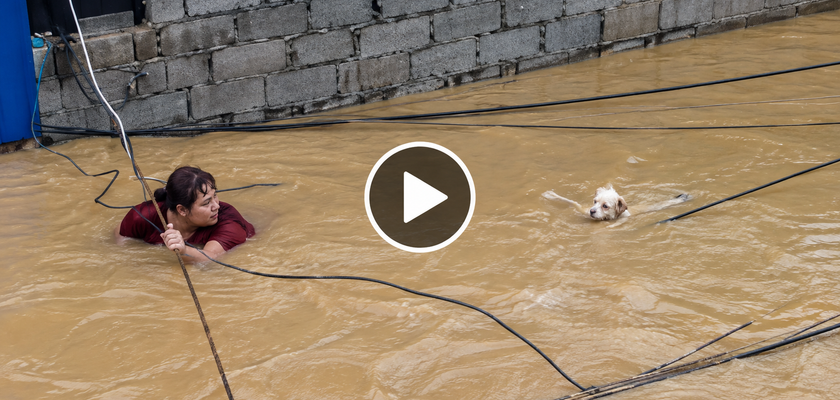
When a flood forces families to leave their homes, every moment can become important, especially when beloved pets are caught in the same dangerous conditions. A moving video shared online tells the story of a dog that appears to be swept away by floodwater during an evacuation, prompting its owner to act quickly in an effort to bring the animal back to safety. The situation highlights the difficult decisions families may face during natural disasters and the powerful connection between people and their companion animals. In moments of uncertainty, a dog is not simply another possession to be left behind but a living member of the household who depends on people for protection and care.
Floods can transform familiar streets, yards, and pathways into unpredictable environments within a short period. Water that initially appears manageable may become stronger as it moves through low-lying areas, carrying debris and making it difficult to maintain stable footing. For families trying to evacuate, the need to gather essential belongings and reach a safer location can create considerable stress. When a beloved pet is also in danger, the situation becomes even more emotionally challenging because owners must consider the animal’s safety alongside their own.

The story described in the video centers on a dog caught in moving floodwater while its owner is attempting to evacuate. As the water threatens to carry the animal away, the owner reportedly reaches out and brings the dog back rather than simply continuing onward without it. The moment captures an instinctive desire to protect a companion that has likely become an important part of everyday family life. Although the available information does not establish every detail of the incident, the central message is clear: the bond between a person and a beloved dog can remain deeply meaningful even when circumstances become frightening and unpredictable.
For many pet owners, the thought of being separated from a dog during a disaster is difficult to imagine. Dogs rely on familiar people for reassurance, particularly when their surroundings change suddenly and the sounds, smells, and movements around them become unfamiliar. During an evacuation, a pet may become confused by rushing water, unfamiliar routes, and the hurried movements of the people nearby. Staying calm and keeping animals secure can therefore be essential parts of helping an entire household reach safety.
A dog cannot understand an evacuation in the same way a person can. It may not know why its family is leaving home or why a familiar path has suddenly become dangerous. Instead, it responds to what it can sense in the immediate environment and often looks to familiar people for direction. This dependence makes preparation especially important, as a secure leash, a suitable carrier when appropriate, and a clear evacuation plan can help owners manage stressful situations more effectively.
The owner’s reported decision to reach for the dog reflects a familiar feeling among people who share their lives with animals. Over time, dogs become part of family routines, greeting their owners at the door, accompanying them on walks, and providing companionship through ordinary days. Their presence can bring comfort and happiness without requiring grand gestures or complicated words. When a crisis arrives, those everyday moments can make the thought of leaving a pet behind feel unbearable.
However, a strong emotional bond must be accompanied by careful decisions during a flood. Moving water can be extremely dangerous, even when it does not appear deep, and a person entering a strong current may be swept away or lose stable footing. Floodwater can also conceal open drains, uneven ground, submerged objects, and damaged surfaces. For this reason, emergency professionals generally advise people to avoid entering moving floodwater and to follow evacuation instructions, seeking trained assistance when a person or animal becomes trapped.
The most effective way to protect pets during a flood is to prepare before water levels begin to rise. Families can keep collars and identification tags updated, maintain recent photographs of their animals, and prepare a pet emergency kit with food, water, medication, waste bags, and copies of important veterinary records. A sturdy leash or secure carrier can help prevent a frightened animal from running into danger. Owners should also identify pet-friendly evacuation destinations in advance so that they do not have to make difficult arrangements at the last minute.
For households with more than one pet, planning becomes even more important. Each animal may have different needs depending on its size, age, temperament, or medical condition. An older dog may need assistance moving quickly, while a nervous animal may require a secure carrier or extra time to settle. By assigning responsibilities and keeping essential supplies together, family members can reduce confusion and improve the chances of moving everyone to safety.
Natural disasters also demonstrate the value of community support. Neighbors, animal rescue volunteers, veterinarians, and emergency responders may all play a role in helping pets during evacuation efforts. Some families may need assistance transporting animals, while others may require temporary shelter or help locating pet-friendly accommodation. When people share reliable information and coordinate with appropriate services, they can help vulnerable animals without placing additional people at unnecessary risk.
After a frightening encounter with floodwater, a dog should be checked carefully even if it appears to be moving normally. Exhaustion, stress, injuries, and the effects of inhaling water may not always be immediately obvious. Owners should seek veterinary advice if their pet has been submerged, struggled in the current, or shows unusual breathing, coughing, weakness, confusion, or difficulty walking. Keeping the animal in a secure, comfortable environment and following professional guidance can support its recovery after the immediate danger has passed.
The emotional recovery of a pet also deserves consideration. A dog that has experienced a sudden and frightening event may become more hesitant around unfamiliar sounds or environments. Familiar voices, a quiet resting place, and a predictable routine can help it regain confidence. Owners should allow their animals time to settle rather than expecting them to return immediately to their usual behavior. Gentle attention and appropriate veterinary care can help families understand what their pets need in the days following an emergency.
The incident also offers a reminder that responsible pet ownership includes planning for circumstances that cannot be predicted. Weather conditions can change quickly, and an evacuation order may leave families with little time to organize their belongings. Knowing where a pet’s supplies are kept, having identification ready, and understanding the safest available evacuation route can reduce the pressure of making decisions during a crisis. These preparations are expressions of care because they help owners protect the animals that depend on them.
For people who have never owned a dog, it may be difficult to understand why someone would feel such a powerful need to bring an animal back during a frightening situation. Yet anyone who has shared years of daily life with a loyal companion may recognize the emotion immediately. A dog can become part of a family’s memories, celebrations, routines, and quiet moments of comfort. Its importance cannot be measured simply by its size or by the words people use to describe it; the relationship is built through time, trust, and mutual dependence.
Beyond the dramatic circumstances of a flood, the story encourages a more thoughtful understanding of animal welfare. Pets cannot independently arrange transportation, find safe shelter, or understand official emergency warnings. They depend on people to make decisions that protect their well-being. Communities that include animals in disaster preparedness plans are better positioned to support families who might otherwise struggle to evacuate safely with their companions.
Although the video description does not confirm every detail of what happened after the owner reached for the dog, the story offers a hopeful possibility. With the animal brought back to safety, the family may have had an opportunity to continue toward a more secure location together. The most important outcome would be for both the owner and the dog to escape the dangerous conditions, receive any necessary assistance, and begin recovering in a safe environment. This hopeful ending reflects what responsible evacuation efforts should aim to achieve: protecting human lives while making every reasonable effort to safeguard beloved pets.
Imagine the dog resting beside its owner after the frightening experience, surrounded by familiar voices rather than rushing water. Once the family has reached safety, the animal can receive fresh water, a comfortable place to rest, and a veterinary check if needed. The owner can begin rebuilding a sense of normality through the same small routines that made the dog feel at home before the disaster. These quiet moments may seem ordinary, but after a difficult experience, they can represent a meaningful new beginning.
Ultimately, this story reminds us that the relationship between people and dogs is often defined by loyalty, responsibility, and the willingness to care for one another through changing circumstances. Floods can threaten homes, disrupt daily life, and force families to make difficult choices, but preparation and thoughtful action can help reduce the risks. A beloved pet deserves to be included in those plans, not treated as an afterthought when an emergency begins. May every family facing a similar challenge find a safe way to evacuate together, and may every dog have the opportunity to return to a peaceful home where it is loved, protected, and cherished as part of the family.

