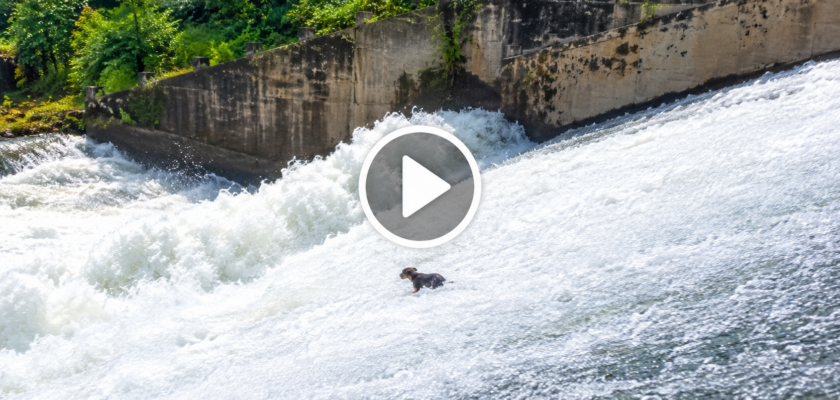
The power of moving water can change a familiar landscape in a matter of moments, creating unexpected challenges for people and animals alike. In a short but striking scene, a small dog can be seen in the middle of a broad stretch of fast-moving white water near a concrete water-control structure. The surrounding water appears forceful, and the dog seems to be struggling to maintain its position as the current carries it along. The image serves as a reminder of how vulnerable animals can become during periods of heavy rainfall and why awareness, preparation, and timely rescue efforts are so important.
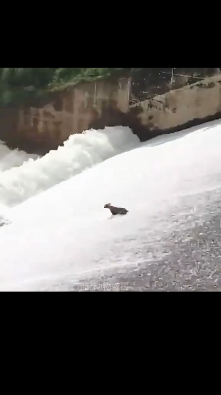
The dog is small in comparison with the large channel surrounding it, making the scale of the situation especially noticeable. Behind the animal, water rushes over or alongside a concrete structure, creating a foamy surface that suggests strong movement. There is no visible person close enough to assist the dog in the captured moment, and the image does not show what happened before or afterward. Although the full circumstances remain unknown, the scene provides a starting point for a story about a vulnerable animal, the dangers of floodwater, and the hope that someone might recognize the need for help before it is too late.
For a dog, a sudden encounter with a powerful current can be confusing and frightening. Even animals that are comfortable around water may struggle when the flow becomes stronger than expected, because swimming ability does not guarantee safety in turbulent conditions. The current can move an animal away from familiar ground, while foam and surface movement can make it difficult to identify a safe direction. A dog caught in such circumstances may have little control over where the water carries it, making the actions of nearby people potentially important to its chances of reaching safety.
How the dog entered the water cannot be determined from the photograph. It may have wandered too close to a channel, become separated from a familiar area, or encountered rising water after heavy rainfall. These are possibilities rather than confirmed details, and the image alone cannot establish whether the dog was a stray or a family pet. What it does show is a small animal in a challenging environment where the water appears to be moving rapidly. That visible situation is enough to highlight the importance of keeping pets away from dangerous waterways, especially during periods of intense rain.
Drainage channels, spillways, rivers, and flood-control structures are designed to manage water, not to provide safe places for animals to swim. When rainfall increases the volume of water moving through these areas, conditions can change quickly. Water that looks manageable from a distance may have a strong current, hidden obstacles, or uneven depths that are difficult to judge from the bank. Concrete surfaces can also be slippery, and steep sides may leave an animal with no easy way to climb out. For these reasons, even a brief encounter with a water channel can become dangerous when the current is strong.
Imagine that someone traveling along a nearby road notices the dog being carried by the current. The sight immediately raises concern, but the safest response would be to avoid entering the water without appropriate training and equipment. A person who jumps into a fast-moving channel may also be swept away, turning one emergency into two. Instead, the observer could contact local emergency services or trained animal rescuers, provide a clear description of the location, and point out the direction in which the dog is moving. If it can be done without approaching an unsafe edge, remaining nearby may help responders locate the animal more quickly.
A rescue team arriving at the scene would first need to assess the water’s movement, the height and condition of the banks, and any possible access points downstream. The safest approach would depend on the location and the equipment available. Trained responders might use suitable protective equipment and a controlled rescue method rather than attempting to reach the animal directly through the current. If the dog moves beyond the original viewing point, responders may also need to check safer locations farther along the channel. Every decision would have to balance the urgency of helping the animal with the need to protect the people carrying out the rescue.
In a hopeful version of the story, a passerby quickly alerts the appropriate rescue service, and the information reaches a team that can respond. The rescuers coordinate their efforts, watch the direction of the current, and identify a safer place where the dog might be brought out of the water. One member keeps track of the animal while another prepares the necessary equipment from stable ground. Their calm, organized approach gives them a better opportunity to help without creating further danger. Although this sequence is an imagined continuation rather than a verified account of the photograph, it illustrates how preparation and teamwork can make a difference in an animal emergency.
Eventually, in this imagined ending, the dog reaches a safer section of the channel where trained rescuers are able to bring it out of the water. The moment it is placed on stable ground marks an important change in the situation. Rather than immediately assuming that the animal is unharmed, the rescuers allow it to settle while checking its breathing, movement, and general condition. Exposure to cold water and physical exertion can affect an animal even when there are no obvious external injuries. A veterinary examination would therefore be a sensible next step, particularly after an encounter with a strong current.
Once the dog is in a secure location, it can receive the care it needs. A veterinarian may check for injuries, signs of exhaustion, breathing difficulties, or other problems associated with the incident. The animal can be dried gently and kept in a comfortable environment while its condition is monitored. Clean drinking water and appropriate food can be offered when it is safe to do so, following professional advice if the dog appears unwell. If the animal has an owner, identification details or a microchip may help reunite them. If no owner can be found, a local shelter or animal welfare organization may be able to provide temporary care.
A reunion would provide an especially meaningful conclusion to this imagined rescue. Perhaps a family has been searching for a missing dog and receives news that an animal matching its description has been found. After confirming ownership, the family could bring the dog home and give it time to rest in familiar surroundings. The experience would encourage them to review their outdoor safety arrangements, check gates and fences, and keep the dog away from waterways during periods of heavy rainfall. If the dog has no known family, a responsible rescue organization could instead work toward a suitable foster home or adoption. Either outcome offers a path toward a safer future.
Beyond the individual animal, the image highlights the importance of flood preparedness for pet owners. Families living near rivers, canals, spillways, or other water channels should know where their animals will go if severe weather threatens. Keeping dogs indoors or moving them to higher ground before conditions deteriorate can reduce the chance that they will encounter dangerous currents. Owners should also prepare an emergency kit containing food, clean water, a leash, identification information, necessary medications, and basic supplies. A plan made in advance is easier to follow than one created after water has already begun to rise.
Community awareness is equally valuable. People who live near waterways can help by reporting damaged fencing, unsafe access points, or places where pets may wander close to strong currents. Neighbors can share information about local animal rescue services and help owners prepare for storms before an emergency occurs. If a dog is seen struggling in moving water, witnesses should communicate the location clearly and avoid entering the current themselves. The World Health Organization advises people to attempt animal rescues only when it is safe to do so, because floodwater can contain fast-moving currents and hidden hazards. These precautions protect both the animal in danger and the people trying to help.
The aftermath of a flood can bring additional challenges, even after the immediate danger has passed. Water may leave behind debris, contaminated surfaces, and unfamiliar scents that can confuse pets or encourage them to explore unsafe areas. Dogs that have been exposed to floodwater should be kept away from potentially contaminated pools and mud, and owners should seek veterinary advice if they notice unusual behavior or signs of illness. Keeping pets on a leash in affected areas and checking their identification can also reduce the chance of another accident. Recovery involves not only finding safety in the moment but also protecting animals in the days that follow.
The most important message in this scene is that animals should never have to face preventable dangers without consideration for their safety. The small dog in the rushing water reminds us that even a capable animal can become vulnerable when environmental conditions change suddenly. Its situation encourages people to pay closer attention to waterways, take weather warnings seriously, and include pets in emergency plans. It also shows why trained rescuers and responsible community members play such an important role when animals become stranded or displaced.
In the hopeful conclusion imagined here, the dog survives the frightening experience, receives veterinary attention, and eventually finds a safe place to rest. Whether reunited with a loving family or cared for by a dedicated rescue organization, the animal is given another opportunity to enjoy a life away from dangerous currents. The rescue becomes a reminder that compassion is most effective when it is paired with careful planning and safe action. While the photograph cannot tell us the dog’s real fate, its message remains meaningful: a timely call for help, a prepared rescue team, and a community that cares can open the way to a brighter outcome for animals in need.

