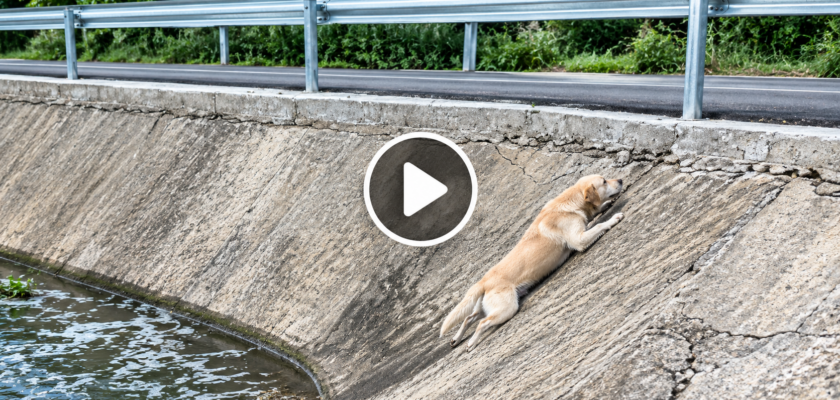
A quiet stretch of road can hide unexpected dangers for animals, especially when a curious or frightened dog finds itself in a place it cannot escape. In a touching photograph, a light-colored dog is seen stretched against the steep concrete wall of a drainage canal, trying to climb toward the roadside above. A metal guardrail runs along the top of the embankment, while a small amount of water can be seen at the bottom of the channel. The image captures a difficult moment for an animal that appears unable to find a safe route back to higher ground, reminding viewers how easily an ordinary outdoor environment can become a challenge for a dog.
The dog’s position suggests that it is making an effort to move upward, but the sloping concrete offers little visible support for its paws. Unlike a natural riverbank covered with soil, grass, or low vegetation, a smooth concrete surface can be difficult for an animal to grip. Even a healthy dog may struggle when the incline is steep and there are no steps, ledges, or other secure footholds. The photograph does not reveal how the dog entered the canal or how long it had been there, but it clearly illustrates why an animal trapped below a high embankment may need assistance rather than simply being expected to climb out alone.
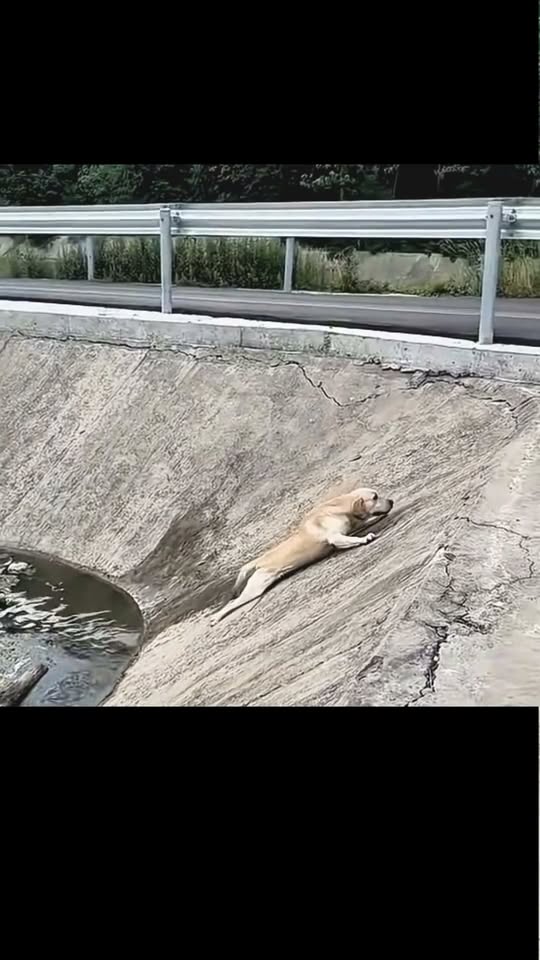
For a dog accustomed to walking along roadsides and exploring its surroundings, the canal might initially have appeared to be just another part of the landscape. Perhaps the animal wandered down a sloping section while following an interesting scent, or perhaps it slipped while exploring the edge. These possibilities cannot be confirmed from the image, but they help illustrate how an accidental fall or a wrong turn can leave a pet in an unfamiliar situation. Once at the bottom, the dog may have discovered that the route it used to descend was much harder to climb in the opposite direction.
The animal appears to be stretching its front legs toward the higher section of the concrete, with its body angled along the slope. Its posture suggests an attempt to gain elevation, although a single photograph cannot establish exactly what it was doing or how it felt. What makes the scene concerning is the lack of an obvious escape route nearby. The upper edge is separated from the dog by a steep embankment and a roadside barrier, while the lower part of the channel offers little visible assistance for climbing. Without a safer route, repeated attempts could leave the dog tired and make it more difficult to move carefully.
Situations like this are a reminder that drainage canals and flood-control channels can present hidden hazards for domestic animals. These structures are often designed to move rainwater efficiently rather than provide easy access for dogs or other small animals. Their steep sides may prevent an animal from returning to ground level, particularly if the concrete is dusty, wet, or otherwise slippery. Depending on the design and weather conditions, water levels can also change, creating additional risks for animals that become trapped below the surrounding ground.
A dog in this position may need more than encouragement from someone standing above. Calling its name or offering a familiar treat could help in some situations, but these approaches may not be enough when the slope is too steep or the animal cannot find a secure foothold. A frightened dog may also move unpredictably when approached, especially if it does not understand that a person is trying to help. The safest response is to assess the surroundings calmly and seek assistance from trained animal rescuers or local emergency services when the location makes an ordinary rescue attempt dangerous.
Imagine a passing motorist noticing the dog from the road and stopping at a safe location. Rather than attempting to climb down the steep embankment, the person could alert other people nearby and contact an appropriate rescue service. A trained responder could then assess the height of the wall, the condition of the concrete, and the best way to reach the animal. Depending on the circumstances, suitable equipment such as a secured ladder, a rescue harness, or another controlled access method might be considered. The exact method would depend on the scene, but the priority would remain the same: bringing the dog to safety without putting the animal or the rescuers at unnecessary risk.
While waiting for help, people nearby could keep an eye on the dog from a safe position and help prevent traffic from becoming an additional danger. A calm environment may make it easier for the animal to remain in one place rather than attempting increasingly difficult climbs. If the dog can hear people above, a gentle voice may also provide some reassurance. However, nobody should lean over an unprotected edge or descend a steep canal without proper equipment and training, because a second person becoming trapped or injured would make the situation more complicated.
In a hopeful version of this story, a rescue team arrives after receiving the report and begins preparing a safe way to reach the dog. One responder approaches carefully while another remains above to help stabilize the equipment and coordinate the process. The dog may initially be uncertain about the unfamiliar people, but patience and calm handling can help reduce unnecessary stress. Rather than pulling the animal abruptly, the rescuers would aim to support its body and guide it toward a secure position. Every movement would be planned around the steep surface and the need to keep both the dog and the people involved safe.
Eventually, the team manages to bring the dog back to level ground. After spending time below the road, the animal can finally stand on a surface that allows its paws to rest securely. The rescuers give it a little time to settle before checking for visible injuries, signs of exhaustion, or other concerns that might require veterinary attention. Fresh drinking water can be offered when appropriate, and the dog can be moved to a calm, protected location. In this imagined ending, the animal is safe, and the people who stopped to help can feel relieved that their decision to act made a positive difference.
The next step would be finding out whether the dog has an owner. If it wears a collar or identification tag, the information could help reunite it with its family. If no owner can be identified immediately, a local animal shelter or rescue organization may be able to scan for a microchip, provide temporary care, and share a responsible lost-dog notice. A dog that has been wandering outdoors may need time to rest and recover, so it is important not to assume that it is ready to return immediately to its usual routine. Careful assessment and a safe temporary arrangement can give the animal the best chance of a good outcome.
This kind of incident also highlights the importance of responsible pet ownership and community awareness. Owners can reduce the risk of accidents by keeping dogs on secure leads near roads, canals, bridges, and other steep structures. Fences and gates around properties should be checked regularly, and dogs that are allowed to explore outdoors should have reliable identification. Communities can also help by reporting damaged barriers, unsecured access points, or places where animals repeatedly become trapped. Even small improvements to public safety can make a meaningful difference for pets and wildlife that share the same environment.
For people who encounter a stranded animal, the most compassionate response is not necessarily the most dramatic one. It is the response that gets the animal help while avoiding additional danger. A quick phone call, a clear description of the location, and patience while trained responders arrive can be more useful than an improvised rescue that puts everyone at risk. Animal welfare organizations regularly emphasize the importance of staying calm, avoiding forceful handling, and seeking professional assistance when an animal is trapped in a dangerous location. These practical steps turn concern into meaningful action.
The photograph of the dog on the concrete slope leaves viewers with an important question: what happens when an animal wants to reach safety but cannot manage the climb alone? The answer begins with recognizing that animals sometimes need human assistance to overcome hazards created by their surroundings. The dog may be able to walk, run, and explore under normal conditions, yet the steep canal wall presents a challenge that determination alone may not solve. A little awareness from a passerby can be the first step toward connecting that animal with people who have the skills and equipment needed to help.
In the hopeful ending imagined here, the dog is rescued, checked by a veterinarian, and given a comfortable place to rest. If it belongs to a family, it is eventually reunited with the people who have been looking for it; if it has no known owner, caring rescuers help arrange a safe temporary home while searching for a suitable long-term solution. The concrete wall that once blocked its way is no longer the end of the story. Instead, the experience becomes a reminder that a community can respond with patience, responsibility, and kindness when an animal needs help.
Sometimes, the difference between remaining trapped and reaching safety begins with one person choosing not to look away. By noticing animals in distress, contacting the right people, and acting with care, ordinary members of the public can help create better outcomes for vulnerable pets. The dog in this image reminds us that not every challenge can be overcome alone, and that asking for help is sometimes the most important step toward a safer future. With a careful rescue and compassionate follow-up, a difficult moment can become the beginning of a much brighter chapter.


