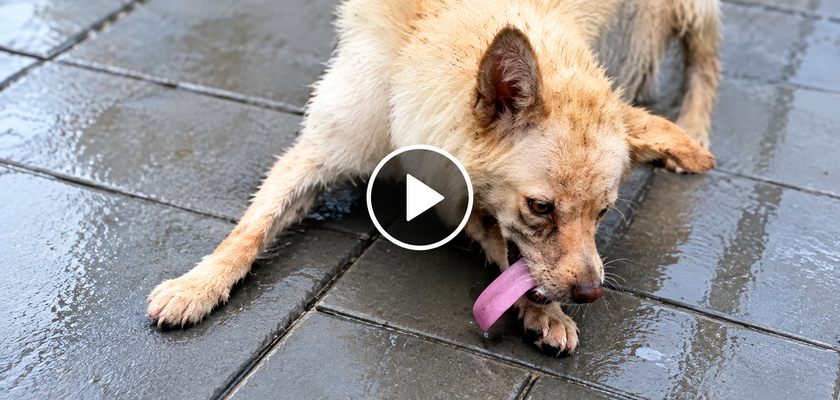
A small act of kindness can make a lasting difference in the life of an animal that has spent too much time without care or companionship. A recent video featuring a thin, light-colored stray dog on a wet pavement has drawn attention to the challenges faced by homeless animals and the importance of offering help when they need it most. Although the scene initially raises concerns about the dog’s well-being, the story carries a hopeful message, as the accompanying caption shares that the dog was taken to a grandmother’s home to be cared for, opening the door to a safer and more comfortable future.
The video shows the dog standing and crouching on a paved outdoor surface that appears damp from the rain or recent weather. Its light tan coat looks somewhat unkempt, and its body appears slim as it lowers its head toward the ground. The dog remains close to the pavement, occasionally changing its position and looking down, creating an impression of an animal that may be tired or uncomfortable. While the short recording does not establish the dog’s full history or medical condition, its appearance encourages viewers to think about the difficulties that stray dogs can experience while living outdoors.
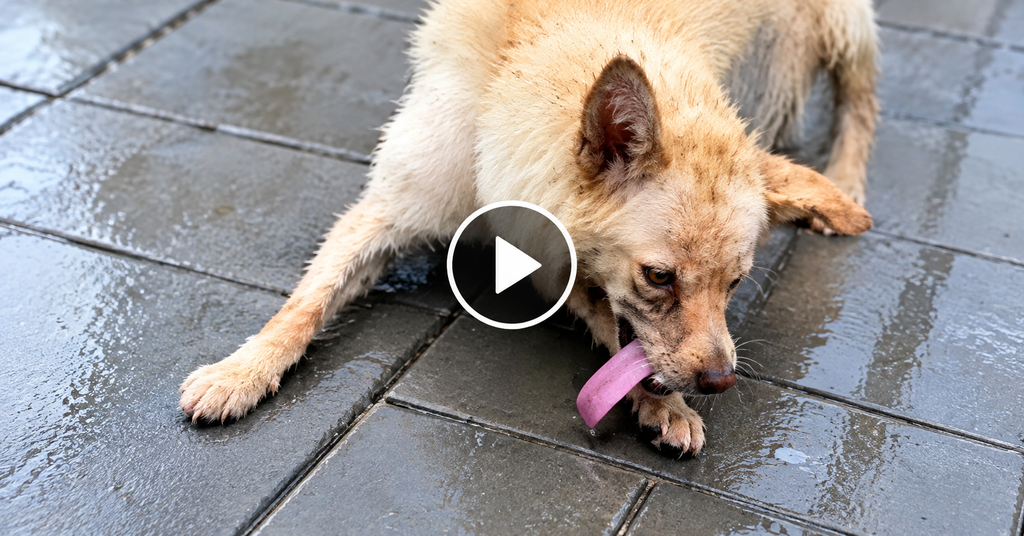
For many homeless animals, everyday life can involve searching for food, finding a dry place to rest, and avoiding traffic or other environmental hazards. Rainy weather can make these challenges even more difficult, especially for dogs without a secure shelter or a person who regularly checks on them. Wet ground may leave an animal uncomfortable, while exposure to changing temperatures and limited access to clean water can create additional concerns. Scenes like the one in this video remind people that an animal living on the street may need more than a passing glance; it may need patient attention, appropriate care, and a safe place where its condition can be assessed.
The dog’s posture is one of the most noticeable details in the recording. It lowers its body close to the ground and keeps its head down for much of the video, occasionally moving as it remains on the wet pavement. These behaviors alone cannot confirm whether the animal is ill, frightened, exhausted, or simply responding to something nearby. Nevertheless, they provide a useful reminder that unusual behavior in a stray animal should be approached with care rather than judgment. Instead of assuming the worst or attempting to force the dog to move, a compassionate observer can keep a safe distance, offer assistance when appropriate, and seek guidance from a veterinarian or an experienced animal rescuer.
One encouraging detail comes from the message accompanying the video, which explains that the dog was taken to a grandmother’s home to be raised and cared for. This information gives the story a more positive direction, moving the focus away from the difficult moment on the pavement and toward the possibility of a new beginning. Although the brief footage does not show every stage of the dog’s journey, the reported decision to provide a home represents an important step toward improving its circumstances. For an animal that may have spent time without consistent care, a stable living environment can provide opportunities to rest, receive regular meals, and gradually become comfortable around people.
A safe home can make a significant difference in the life of a rescued dog. Unlike an exposed outdoor location, a suitable home can offer protection from rain, wind, traffic, and other everyday dangers. Regular access to fresh water, nutritious food, clean bedding, and a quiet resting area can help support a dog’s general well-being. Just as importantly, a calm environment allows a caregiver to observe changes in appetite, movement, energy, and behavior, making it easier to recognize when professional veterinary attention may be needed.
For a dog that has experienced uncertainty, adjusting to a new environment may take time. Some rescued animals approach people readily, while others remain cautious until they learn that their surroundings are safe. A gentle approach is often the most helpful, allowing the dog to explore at its own pace without unnecessary noise, sudden movements, or pressure to interact. Consistent routines can also help establish trust, particularly when feeding, resting, and outdoor activities take place in predictable and comfortable ways. With patience and responsible care, a once-wary stray may gradually begin to feel more secure.
The decision to care for a rescued animal also brings responsibilities that extend beyond providing a temporary place to stay. A veterinary examination is an important first step because a professional can assess the dog’s health, check for injuries or parasites, and recommend appropriate vaccinations and treatment. The caregiver can also ask about nutrition, safe exercise, and whether the dog would benefit from additional testing or follow-up appointments. If the dog has not yet been examined, arranging a visit would help ensure that its transition into a new home begins with its health and comfort in mind.
Food and hydration are equally important parts of a thoughtful rescue plan. A dog that appears underweight may need a suitable diet and a gradual feeding routine rather than a sudden change in eating habits. Fresh drinking water should always be available, and any signs of persistent weakness, difficulty breathing, repeated vomiting, or an inability to stand comfortably should prompt urgent veterinary advice. These precautions do not mean that every stray dog is seriously ill; instead, they reflect a responsible approach that places the animal’s needs ahead of assumptions about its condition.
Beyond physical care, emotional security deserves attention as well. Dogs are social animals, and many benefit from a consistent relationship with a patient caregiver, although their individual personalities and experiences vary. A comfortable sleeping area, respectful handling, and opportunities to rest without disturbance can help a newly rescued dog settle in. Family members should understand that the animal may need time to learn household routines, and young children should always be supervised during interactions. Building trust is not a race, and small signs of progress can be just as meaningful as dramatic changes.
The role of the grandmother’s home, as described in the video’s caption, offers a simple example of how families can contribute to animal welfare. Not every person has the resources to operate a shelter or take in several animals, but even one household may be able to offer a dog a safe place when circumstances allow. Family members can share responsibilities for feeding, cleaning, supervision, and veterinary visits, making it easier to maintain consistent care. When everyone understands the commitment involved, a rescue can become a lasting arrangement rather than a short-lived response to an emotional moment.
Stories about stray dog rescue also highlight the value of responsible community involvement. People who encounter an animal in need can contact local animal welfare organizations, veterinary clinics, or experienced rescuers for practical advice. If the dog is in a dangerous location, it is important to avoid putting people or the animal at further risk while seeking appropriate assistance. When it is safe to do so, providing a little distance, observing the animal’s condition, and sharing accurate information with a qualified helper can be more useful than attempting an unfamiliar rescue without preparation.
Social media can help bring these stories to a wider audience, but the most constructive posts focus on compassion, practical solutions, and the dignity of the animal involved. A short video cannot always reveal what happened before the recording began or what followed after it ended. For that reason, viewers should be careful not to draw unsupported conclusions about an animal’s past, a person’s intentions, or a medical condition based on a few seconds of footage. The reported decision to provide the dog with a home offers a positive message without requiring speculation about details that remain unknown.
There is also a broader lesson about adopting and caring for animals rather than overlooking them. A stray dog is not simply an animal without an owner; it is a living creature with individual needs, preferences, and the capacity to form relationships. Responsible pet adoption can reduce the number of animals living without stable shelter, while spaying and neutering programs can help communities manage stray animal populations over time. Education about humane treatment, veterinary care, and safe animal handling can also encourage people to respond more effectively when they encounter a dog that appears to need assistance.
For people who already share their homes with pets, the story may inspire a renewed appreciation for the everyday comforts their animals receive. A dry sleeping place, a regular meal, a bowl of clean water, and a familiar person waiting nearby may seem ordinary, yet these simple things contribute greatly to an animal’s quality of life. For a rescued dog, the transition from an uncertain outdoor setting to a secure home may represent the beginning of a very different routine. The real value of that change lies not in a dramatic moment captured on camera, but in the continued commitment to meeting the dog’s needs day after day.
The most hopeful part of this story is the possibility that the dog will no longer have to face the same uncertainty alone. According to the accompanying caption, the decision to take the animal to a grandmother’s home has given it an opportunity to receive care in a more secure setting. With suitable food, fresh water, veterinary attention, patience, and a protected place to rest, the dog can have a better chance of settling into its new surroundings. Its progress will depend on the care it receives, but the reported change in circumstances offers a meaningful reason for optimism.
Ultimately, this stray dog story is a reminder that kindness can begin with a simple decision to pay attention. A person who notices an animal in difficulty may not be able to solve every problem, but taking responsible action can open the way to help, whether through adoption, temporary shelter, or contact with an animal welfare organization. The dog’s journey from a wet pavement to the possibility of a loving family home illustrates why stray dog rescue, animal adoption, and compassionate pet care matter in communities everywhere. With a safe environment and people willing to provide consistent support, a difficult chapter can become the start of a brighter future, offering this dog the chance to experience comfort, security, and the quiet happiness of finally having a place to call home.

