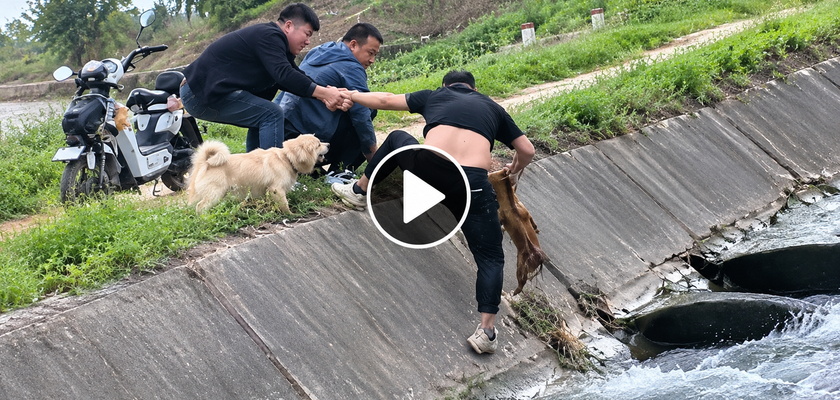
Sometimes, a small act of kindness can make an extraordinary difference in the life of an animal in danger. A heartwarming rescue video shared online captures a frightening moment when a dog struggles against fast-moving water in a concrete drainage channel, seemingly unable to find a safe way out. As the water continues to carry debris along the channel, the dog attempts to keep its head above the surface and move toward the sloping edge. Fortunately, several people notice the animal’s difficult situation and step forward to help, turning a worrying scene into a powerful reminder of how compassion, quick thinking, and teamwork can give a vulnerable animal another chance.
The footage, reportedly filmed near Xi’an in Shaanxi Province, China, shows a brown dog moving through a channel filled with rushing water. The channel has steep concrete sides, making it difficult for an animal to climb out without assistance. Small pieces of debris can be seen floating along the water, while the current makes it challenging for the dog to maintain a stable position. From the nearby walkway, the situation becomes increasingly concerning as the dog struggles to reach the sloping bank. Although the video is brief, it clearly illustrates the difficulties that animals can face when they become trapped in an environment that offers few accessible escape routes.
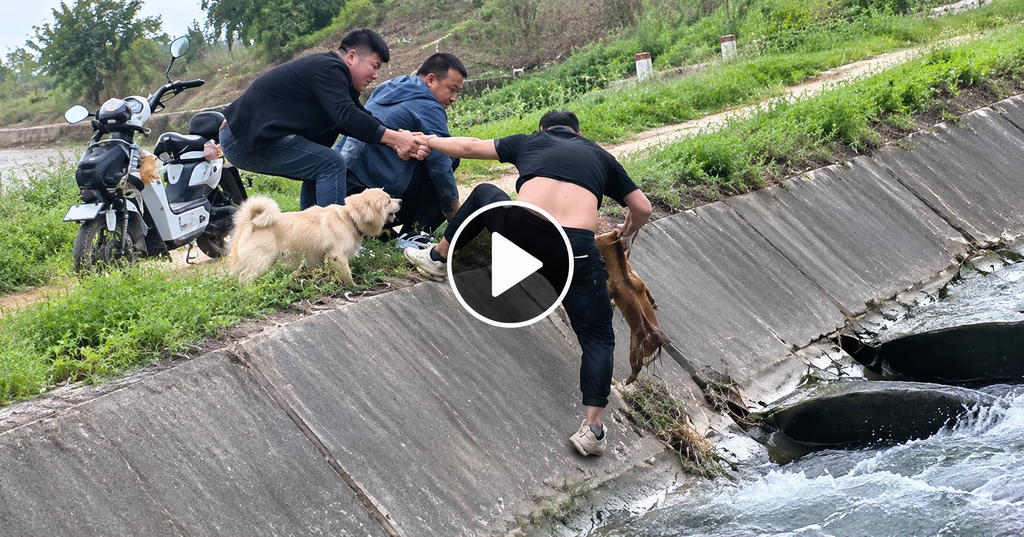
As the recording continues, the dog appears to make repeated efforts to move closer to the edge. The concrete surface is steep, and the water below continues flowing past the animal, making the climb especially challenging. A dog may be strong enough to run, jump, and navigate ordinary terrain, but those abilities do not necessarily help when the ground is slippery and the surrounding water is moving quickly. In such circumstances, even a relatively short distance to dry land can become a serious obstacle. The scene highlights why animals caught in drainage channels, flooded streets, or other water hazards may need assistance from people who understand how to approach the situation safely.
The most encouraging part of the video begins when several people gather near the edge and attempt to help the dog. Rather than simply watching from a distance, they appear to coordinate their movements and reach down toward the animal. Their actions suggest a shared determination to give the dog an opportunity to escape the water. Working together is particularly important in a situation like this because one person may have difficulty reaching the animal while maintaining a secure position on the bank. With others nearby, rescuers can help support one another and improve their chances of carrying out an effective rescue without putting themselves unnecessarily at risk.
The rescuers’ willingness to respond demonstrates the value of paying attention to animals in distress. In busy communities, people often pass drainage channels, roadside ditches, and waterways without thinking about the possibility that an animal might become trapped there. Yet a moment of observation can make a meaningful difference when someone notices unusual movement or hears an animal calling for help. Recognizing a problem early and contacting the appropriate emergency or animal rescue service can provide an opportunity for assistance before the situation becomes more difficult. The people in this video offer an encouraging example of how awareness and a willingness to help can lead to positive action.
Dogs are naturally curious and adaptable animals, but they do not always recognize environmental hazards before entering them. A familiar route beside a road may become dangerous after heavy rainfall, while an open drainage channel can be difficult to navigate if its sides are steep and slippery. Stray dogs may be particularly vulnerable because they often search for food, water, and shelter without the supervision of a caregiver. A sudden change in weather or water levels can transform an ordinary area into a hazardous environment, leaving an animal unable to return to safety on its own.
Fast-moving water deserves special attention because its force can be much greater than it appears from the shore. Even relatively shallow water may destabilize a person or animal when the current is strong, and submerged debris can create additional obstacles. Concrete channels can be especially challenging because their smooth surfaces provide little traction and may offer no convenient steps or ramps. For these reasons, attempting to enter the water without proper training or equipment can create additional danger for both the animal and the person trying to help. A responsible rescue begins with assessing the surroundings and choosing an approach that prioritizes everyone’s safety.
The people shown in the video appear to recognize that the dog needs assistance reaching the bank. Their efforts bring attention to an important principle in animal rescue: helping effectively is not simply about acting quickly, but also about working carefully. When circumstances permit, trained rescuers can use appropriate equipment, secure footing, and coordinated movements to reach an animal without exposing themselves to unnecessary risks. If members of the public encounter a similar emergency, contacting local emergency services or an experienced animal rescue organization is often the safest first step. A compassionate response should protect the animal while also ensuring that those offering help remain safe.
Once an animal has been brought out of dangerous water, its needs may continue beyond the immediate rescue. A dog that has struggled against a current may be tired, cold, frightened, or affected by water exposure, even if it appears able to stand and move. A quiet, sheltered place can help the animal settle while a veterinarian assesses its condition. Fresh drinking water should be offered when appropriate, and the dog should be checked for injuries, breathing difficulties, or other signs that require medical attention. If the animal appears weak, disoriented, or unable to move normally, prompt veterinary care is especially important.
A successful rescue can also mark the beginning of a new chapter for a dog that may not have a permanent home. After its immediate needs have been addressed, a local animal welfare group or responsible caregiver may be able to help identify whether the dog has an owner. If no owner can be located, temporary foster care may provide a safe place while longer-term arrangements are considered. A suitable home offers more than protection from dangerous weather; it can provide regular meals, clean water, veterinary attention, and a consistent relationship with people who care about the animal’s well-being.
Building trust after a frightening experience takes patience. Some dogs quickly approach the people helping them, while others may remain cautious until they feel secure. Caregivers can support recovery by creating a calm environment, avoiding sudden movements, and allowing the dog to rest without pressure. Regular feeding schedules, comfortable bedding, and gentle interaction can help establish a sense of routine. If the dog needs medical treatment, following veterinary advice will also support its physical recovery. Over time, these everyday acts of care can help a rescued animal move beyond a difficult experience and become more comfortable in its new surroundings.
The rescue also illustrates how communities can improve animal safety before emergencies occur. Local authorities and neighborhood groups can identify locations where steep drainage channels, uncovered waterways, or damaged barriers may pose risks to people and animals. Where appropriate, improved access points, secure barriers, and regular maintenance can help reduce the chance of future accidents. Public awareness campaigns can also encourage residents to report hazards and seek assistance when they notice animals in danger. These practical steps may seem modest, but they can contribute to safer environments for pets, stray dogs, and the people who share their surroundings.
Social media plays a useful role in bringing attention to these moments of compassion. A short video can encourage viewers to think about animal welfare and recognize the importance of helping vulnerable creatures. However, it is equally important to distinguish between what the footage actually shows and what remains unknown. While the recording captures people attempting to rescue the dog from fast-moving water, it does not provide every detail about the animal’s condition afterward or its long-term future. Responsible reporting should focus on the visible rescue efforts and the broader lessons they offer without inventing details about the dog’s background or claiming medical outcomes that have not been confirmed.
For viewers who feel moved by this story, there are many constructive ways to turn concern into action. Supporting reputable animal shelters, volunteering with established rescue organizations, and helping provide food or veterinary assistance can benefit animals that lack stable homes. Pet owners can also take precautions during heavy rainfall by keeping dogs away from drainage channels and flooded areas, using secure leads when appropriate, and ensuring that animals have access to safe indoor shelter. When an emergency occurs, sharing accurate information with local responders can be more useful than attempting a dangerous rescue without the necessary equipment or experience.
The most heartwarming element of this video is the sight of people choosing to help an animal that cannot explain what it needs. Their willingness to come together offers a hopeful reminder that kindness often begins with a simple decision to stop, pay attention, and take responsible action. The dog faces a difficult challenge in the rushing water, but the presence of people prepared to assist creates an opportunity for a much safer outcome. Although the footage does not establish every detail of what happened after the rescue attempt, the actions captured on camera reflect the importance of compassion and cooperation when an animal is in danger.
In the end, this dog rescue story carries a message that extends far beyond a single drainage channel. It reminds us that animals depend on people to recognize hazards, respond thoughtfully, and provide care when circumstances leave them vulnerable. The people who step forward in the video show how teamwork and concern for another living creature can turn a frightening moment into an opportunity for hope. With a safe recovery environment, appropriate veterinary attention, and the possibility of a caring home, the dog can have a brighter future ahead. The happiest ending is one in which the animal leaves the dangerous water behind, finds security on dry ground, and eventually enjoys the comfort and companionship every dog deserves.


