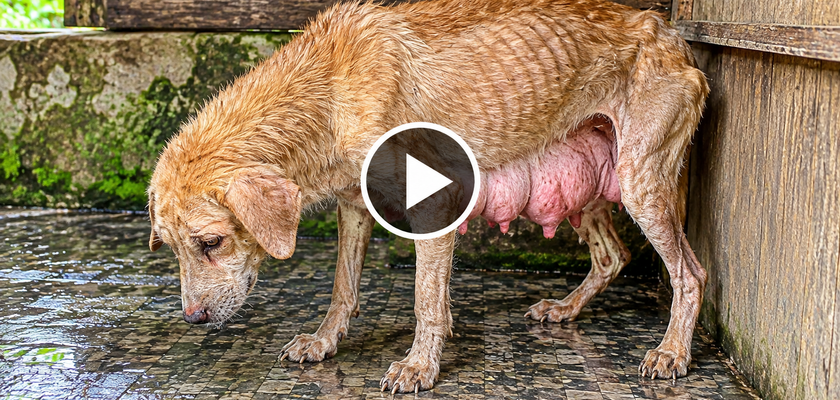
Behind the walls of an old wooden shelter, a fragile mother dog stands quietly on a worn, dirty floor. Her pale golden coat hangs loosely over an extremely thin body, revealing the outline of her ribs, spine, and hips. Her eyes are red and irritated, and her movements appear slow and uncomfortable. A short video showing the dog has raised concern about her condition and the care she may urgently need.
The footage begins with a wide view of a small, enclosed wooden structure. Its walls and ceiling are made from aged boards, with visible gaps that allow light to enter. The floor is covered with old patterned tiles, dirt, and scattered debris. It is a simple and rather neglected-looking space, with no clearly visible clean bedding or comfortable resting area.
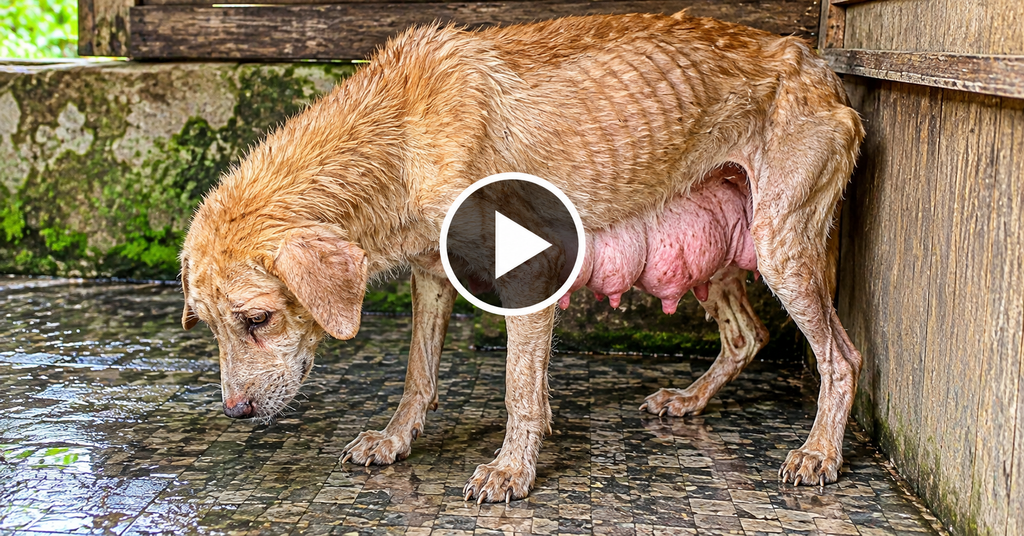
Standing inside is a light-colored dog with a noticeably thin frame. Her head hangs low as she looks toward the floor. Her legs appear narrow, and the shape of her ribs and backbone is clearly visible beneath her skin. Even from a distance, her physical condition is concerning.
The dog’s abdomen is another noticeable detail. Her mammary glands are enlarged and clearly visible beneath her body. This may be consistent with a dog that has recently given birth or is nursing puppies, although the video does not confirm her reproductive history. No puppies appear in the recording, so it is impossible to know whether they are nearby or whether the mother is currently caring for a litter.
As the camera moves closer, the dog’s face comes into focus. Her eyes appear unusually red, particularly around the eyelids. There is also visible moisture or discharge around the eye area. She blinks and turns her head slightly, revealing the irritated appearance from different angles.
The close-up makes the dog’s condition even more difficult to ignore. Her pale face looks tired, while her eyes appear uncomfortable. She looks briefly toward the camera before turning her head away. The footage does not establish what is causing the redness, but the visible symptoms are concerning enough to warrant a veterinary examination.
Eye redness and discharge in dogs can have several possible causes. Irritation, infection, injury, allergies, or other eye conditions may produce similar visible symptoms. A veterinarian would need to examine the dog to identify the cause and determine whether medication or other treatment is required. It would not be appropriate to diagnose her condition from a short video alone.
The dog’s extremely thin body is another serious concern. Her ribs and spine are sharply outlined, and her hips appear prominent. This degree of visible thinness may be associated with inadequate nutrition, parasites, chronic illness, or other underlying problems. However, the recording does not provide enough information to determine why she has become so underweight.
A dog in such a condition may need more than an ordinary meal. Severe weight loss can affect the body’s ability to function normally, and an animal that has been undernourished for an extended period may require a carefully managed feeding plan. A veterinary professional can assess her body condition, hydration, and overall health before recommending appropriate nutrition.
The possibility that she is nursing makes her situation particularly concerning. Producing milk requires additional energy and nutrients, and a mother dog needs sufficient food and water to maintain her own health while caring for puppies. If she is feeding a litter while already severely underweight, her nutritional needs may be especially difficult to meet.
As the video continues, the dog slowly raises her head. Her ears hang down, and her expression remains subdued. She shifts her weight and takes a few small steps across the tiled floor. Her movements are not energetic, and she appears to spend much of the recording with her head lowered.
The camera captures her body from the side, showing the pronounced outline of her ribs and the thinness of her legs. Her abdomen hangs low, with the enlarged mammary glands visible beneath it. The contrast between her physical fragility and the demands that may come with caring for puppies makes the scene especially emotional.
She then turns her face toward the camera again. Her red eyes are clearly visible, and the surrounding skin appears irritated. For a moment, she stands almost motionless, looking toward the person filming. There is no way to know what she is experiencing emotionally, but her physical appearance suggests that she should receive attention from someone qualified to assess her health.
Later in the recording, the dog begins lowering her body. She bends her front legs and gradually brings herself closer to the floor. Her movements remain slow as she settles down on the hard surface. By the final seconds, she is lying low inside the wooden shelter, with her head close to the tiles.
This moment is particularly concerning because the dog appears to have limited energy. However, a short recording cannot establish whether she is exhausted, resting, in pain, or affected by an underlying illness. What can be seen clearly is that she is severely thin and has visible eye irritation. Both issues deserve careful assessment rather than being dismissed as ordinary signs of aging or tiredness.
For a dog showing these symptoms, timely veterinary care is important. A veterinarian may need to examine her eyes, check for infection or injury, evaluate her nutritional condition, and look for possible underlying diseases. Blood tests, parasite checks, or additional examinations may be recommended depending on what the physical assessment reveals.
Her living environment also deserves attention. The shelter appears enclosed, but the floor looks dirty and offers little visible comfort. A recovering dog needs a clean, dry, quiet place where she can rest without unnecessary stress. Fresh drinking water, suitable food, and regular monitoring are basic necessities.
If the dog is currently nursing, the puppies’ well-being should also be checked. Young puppies depend on their mother for nourishment and warmth, especially during their first weeks. If they are present but not visible in the footage, their condition and access to milk would be important considerations. Any decision to separate them from their mother should be made carefully and with veterinary guidance, unless an immediate safety concern requires intervention.
Anyone who encounters a dog in a similar condition should seek help from a veterinarian or an experienced animal rescue organization. Approaching the animal calmly is important, particularly when she may be uncomfortable or frightened. If she is too weak to move normally, professional assistance can help prevent additional stress or injury during transport.
It is also important to avoid making assumptions about how the dog reached this condition. The video does not identify an owner, explain how long she has been inside the shelter, or show what food and care she receives. It does not prove that she has been abandoned or deliberately neglected. Nevertheless, the visible signs of severe thinness and eye irritation are enough to make her welfare a serious concern.
A mother dog deserves care just as much as the puppies who may depend on her. It can be easy to focus only on the little animals in a litter, but the mother’s health is essential to their survival and development. She needs adequate nutrition, clean water, a safe resting place, and medical attention when something appears wrong.
The footage also reminds viewers that animal welfare involves noticing problems before they become even more serious. A dog that is losing weight, developing eye discharge, or showing unusual weakness may need help long before the situation becomes immediately life-threatening. Early veterinary assessment can provide a better opportunity to identify problems and begin appropriate treatment.
As the recording comes to an end, the dog remains lying on the worn floor of the wooden shelter. Her pale coat, prominent bones, and irritated red eyes leave a lasting impression. There is no visible sign of what happens after the camera stops recording, and no confirmed information about whether she receives treatment or whether her puppies are safe.
Still, her situation leaves room for hope. With proper veterinary care, appropriate nutrition, a clean resting area, and patient attention, she may have an opportunity to regain strength. If she is caring for puppies, supporting her health could also help give them a safer beginning.
Every animal deserves to live without unnecessary suffering. This frail mother dog should not be remembered only for her heartbreaking appearance, but also as a life worthy of compassion, protection, and care. Sometimes, the first step toward a better future is simply recognizing that an animal needs help and making sure the right people are there to provide it.

