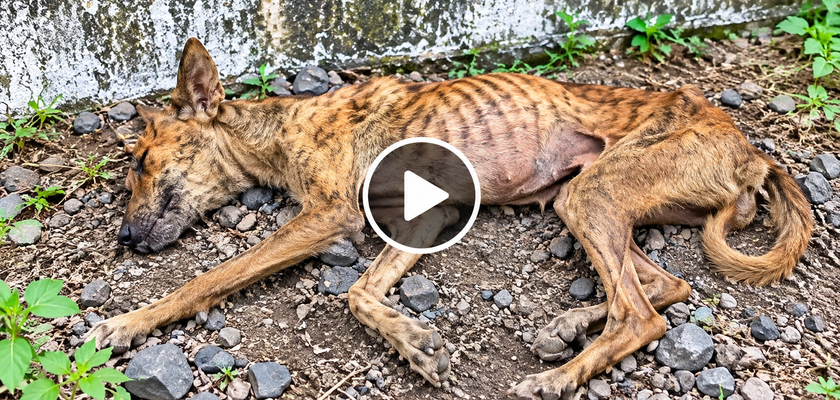
Sometimes, a short video can reveal a heartbreaking situation without showing how it began or what may happen next. A few seconds of footage featuring two extremely thin dogs lying on the ground beside an old concrete wall have drawn attention to the vulnerability of animals in need. Their fragile appearance and lack of movement make the scene difficult to watch, reminding viewers how important it is to recognize signs of animal distress.
The video opens with a view of two brown brindle dogs resting on a rough patch of ground. They are positioned close to a weathered concrete wall marked by dark stains, patches of discoloration, and signs of long-term exposure to the elements. Small stones, dry leaves, and scattered debris cover the ground beneath them.
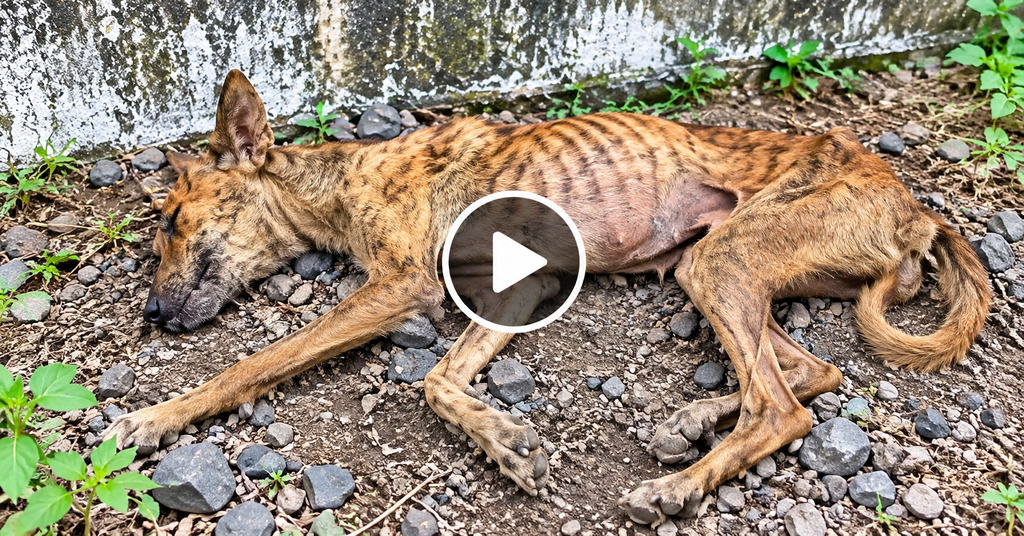
Both dogs appear severely underweight. Their bodies are narrow, their ribs and hip bones are clearly visible, and their legs look unusually thin. Their coats are short and brown with darker brindle markings, but their overall appearance suggests that they may be in a very vulnerable condition.
One dog lies stretched out along the ground, with its head resting low near the stones. The second dog is positioned nearby, also lying down with little visible movement. Neither appears to have much energy during the brief recording. The camera slowly approaches, bringing the dogs into closer view.
As the person filming moves nearer, the condition of the first dog’s face becomes more noticeable. Its eyes appear moist, and its head remains close to the ground. The dog looks toward the camera but does not get up. Its expression and still posture create a deeply concerning image, although the footage alone cannot explain what the animal is experiencing.
The camera then focuses on the second dog. Its face is also thin, and its eyes appear tired. It remains beside the other animal, with its head lowered and body resting on the gravel. The two dogs are close enough to be seen together in the same small area, yet neither makes a significant movement during the recording.
There is no visible food or clean drinking water beside them. The surrounding space looks exposed, with no obvious bedding or comfortable resting surface. The old wall provides a backdrop, but it does not appear to offer the dogs much protection from changing weather conditions. The ground beneath them is uneven and covered with small stones and debris.
The scene naturally raises questions about their welfare. Severe thinness in dogs can be associated with several different circumstances, including inadequate nutrition, parasites, chronic illness, dental problems, or other medical conditions. However, it would be irresponsible to identify a specific cause based only on their appearance in a short video. A proper veterinary examination would be needed to understand what is happening and determine the care they require.
Their lack of movement is another reason for concern. A dog that remains lying down and appears too weak to stand may need urgent assessment, especially when accompanied by a visibly underweight body condition. At the same time, a brief video cannot establish whether an animal is unconscious, resting, injured, or suffering from a particular illness. The safest approach is to treat such a situation seriously and seek help from qualified animal-care professionals.
As the camera moves closer, the first dog’s eyes remain one of the most striking details. There is moisture around the eye, and the dog continues to look toward the person filming. Its head stays low, while the rest of its body remains on the ground. The close-up makes its thin facial structure and tired appearance more visible.
The second dog is also shown from a close angle. Its face appears narrow, with its muzzle resting near the ground. It does not visibly react much to the camera. The footage offers no clear explanation of whether the dogs are familiar with one another or how long they have been lying in that location. What it does show is that both animals appear to need attention.
Animal neglect and poor health can sometimes go unnoticed when vulnerable dogs are living in less visible areas. An animal may gradually lose weight over time, while its ability to move, find food, or seek shelter becomes increasingly limited. By the time its condition is obvious to passersby, it may already require substantial medical care.
Dogs experiencing severe malnutrition need more than simply being given a large meal. Their condition should be assessed carefully, because feeding an extremely undernourished animal too quickly or without appropriate guidance can create additional health risks. A veterinarian can evaluate hydration, body condition, possible underlying illnesses, and the safest feeding plan.
If these dogs are still in the same location, the first priority should be to determine whether they are responsive and able to move safely. Anyone who encounters animals in a similar condition should contact a local veterinarian, animal rescue organization, or relevant local authority. If the dogs are too weak to stand, professional assistance is particularly important.
Providing clean water may help when it can be done safely, but it should not replace veterinary care. The dogs may need medical evaluation, treatment for parasites or other conditions, nutritional support, and a protected place to recover. Their surroundings should also be checked to ensure that they are not exposed to traffic, extreme temperatures, or other immediate hazards.
It is equally important to approach frightened or unwell animals gently. Even a normally friendly dog may react unpredictably when it is in pain or feeling weak. A calm approach and help from someone experienced in animal handling can reduce the risk of further distress to both the dogs and the people trying to assist them.
The video does not show anyone providing food, water, or medical attention. It also does not reveal who owns the dogs, whether they have been living beside the wall for a long time, or what happened before the recording began. There is no confirmed explanation for their physical condition, and the footage does not establish whether they were abandoned or simply found in that location.
Those unanswered questions matter because an emotional image should not be mistaken for a complete account of an animal’s circumstances. It is possible to express concern without making claims that the video cannot support. The visible signs alone are enough to justify hoping that someone checks on the dogs and ensures they receive appropriate care.
The scene also highlights a broader responsibility toward animals that may be struggling in public or neglected spaces. Dogs depend on people for access to food, water, shelter, and medical attention. When an animal becomes too weak to move normally, it may be unable to reach those basic necessities without assistance.
For communities, noticing vulnerable animals can be the first step toward preventing further suffering. Sharing accurate information about an animal’s location with a reliable rescue group may help connect it with people who have the experience and equipment to respond. Supporting local shelters and responsible animal welfare organizations can also help provide care for animals that have nowhere else to turn.
The two dogs in this video deserve to be treated with patience and compassion. Their extremely thin bodies and quiet behavior make their situation concerning, but their future cannot be determined from the footage alone. A careful assessment by a veterinarian or experienced rescuer would be the best way to understand their condition and decide what should happen next.
As the recording pulls back, both dogs can be seen lying beside the same weathered wall. The wider view shows just how exposed their resting place appears, with stones and scattered leaves surrounding their bodies. Neither dog moves much before the clip ends, leaving viewers with an unsettling image of two vulnerable animals in need of attention.
There is still room for hope whenever people choose to respond with kindness and practical help. With timely veterinary care, appropriate nutrition, and a safe place to rest, some dogs in poor condition may have an opportunity to recover. The extent of that possibility depends on their individual health and the care they receive.
Ultimately, this short recording is a reminder that animal welfare begins with paying attention. Two dogs lying quietly on a rough patch of ground may be easy for someone to overlook, but their condition deserves concern rather than indifference. They deserve the chance to be examined, protected, and given the care necessary to live with dignity.
No one can know from this video what the next chapter will bring for these two dogs. But one thing is clear: animals showing signs of severe weakness should not have to face their circumstances without help. A compassionate response could be the first step toward a safer and more hopeful future.

