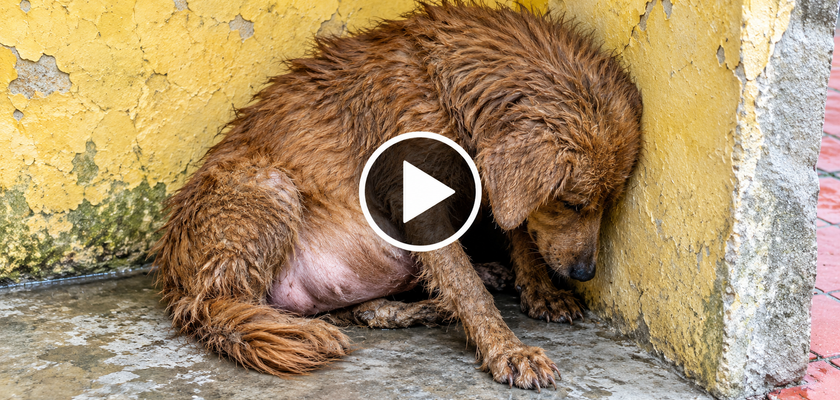
On a quiet morning in a small neighborhood, a passerby noticed something unusual in the corner of an old sheltered wall. Curled tightly against the faded yellow paint, a small brown dog sat with her head lowered, her fur damp and tangled from spending time outdoors. She was not barking, she was not running, and she was not asking for attention. She was simply trying to stay safe in the only shelter she could find, and that quiet moment would soon change the direction of her life. What happened next became a gentle reminder of how much kindness can matter, especially for animals that have learned to keep a low profile in order to survive. For many people who later heard her story, it was not only about one dog rescue, but also about the power of patience, community support, and responsible pet care.
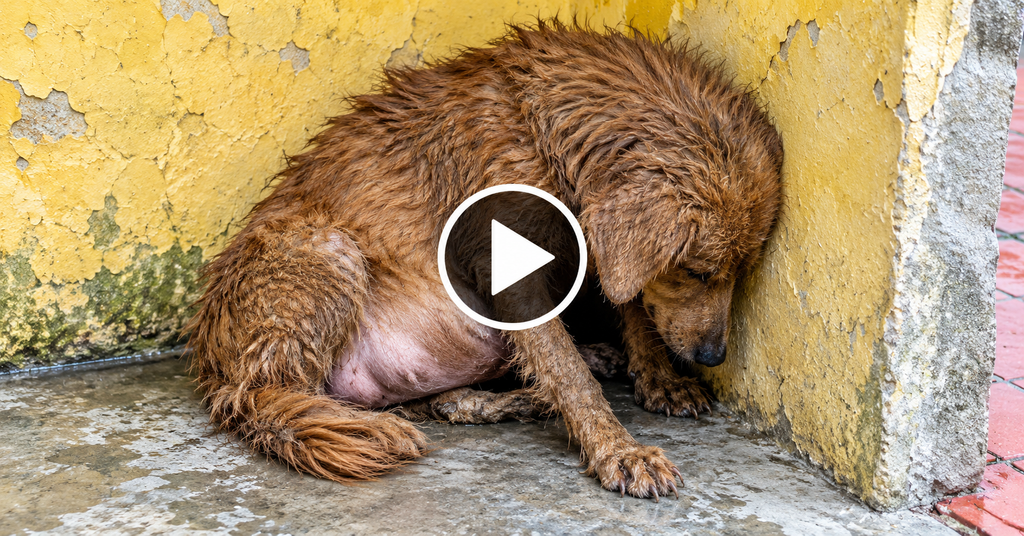
The dog, who rescuers would later describe as gentle and shy, appeared to have been living on her own for some time. Her coat was matted and dirty, her body looked tired, and her eyes showed the kind of caution that often comes from long days without regular food, clean water, or a safe place to rest. Stray dogs in many towns and cities often face similar challenges, including changing weather, traffic, limited food sources, and difficulty finding shelter. In her case, the corner of that old structure offered some protection from rain and wind, but it could not provide the nutrition, medical care, or comfort that every dog needs. Local animal rescue volunteers say that dogs in this situation often choose quiet corners because they feel less exposed there, and they may stay very still when people approach because they are unsure whether the person is friendly. That behavior is not a sign that a dog does not want help. In many rescue stories, it is simply a sign that the animal needs time, space, and a calm voice to feel safe again.
When the passerby stopped to look more closely, the dog slowly lifted her head and looked up with soft, uncertain eyes. She did not move away, but she also did not rush forward, and that hesitation told the rescuer that she would need a careful and unhurried approach. Instead of reaching out quickly or making loud noises, the person spoke in a low, steady voice and stayed at a comfortable distance, allowing the dog to decide when she felt ready. This kind of patient first contact is often recommended by animal rescue organizations and veterinarians, because a frightened dog is more likely to respond positively when it does not feel cornered or rushed. After a few minutes, the dog relaxed slightly, and the rescuer was able to offer a small amount of food and fresh water. She ate slowly, pausing often to check her surroundings, and that small meal was the first step in building trust between a stray dog and the people who wanted to help her.
With help from a nearby animal rescue team, the dog was gently guided into a carrier and taken to a local veterinary clinic for a full health check. The veterinary team began with the basics, including checking her weight, temperature, skin, coat, ears, teeth, and overall energy level. They also checked whether she had a microchip, which is a small identification device that can help reunite a lost pet with its family. In her case, no owner information was found, which suggested that she had either been living outdoors for a long time or had never had a permanent home. The veterinarians recommended a warm bath, a careful grooming session, a nutritious diet, parasite prevention, and vaccinations, all of which are standard steps in a stray dog rescue and rehabilitation plan. They also noted that she would benefit from rest in a quiet indoor space, where she could sleep without worrying about noise, weather, or unfamiliar animals. Throughout the examination, the dog remained calm, and the staff praised her gentle temperament and her willingness to accept care once she understood that she was safe.
The next few days were focused on comfort, routine, and slow recovery. At the rescue shelter, volunteers prepared a clean bed, a soft blanket, fresh water, and small meals served at regular times throughout the day. They kept her environment quiet and avoided too many visitors at once, because stray dog rehabilitation often works best when new experiences are introduced gradually. In the beginning, she still preferred to rest in a corner of her kennel, a habit that many rescue dogs develop when they have spent a long time outdoors. Volunteers did not try to force her out of that spot. Instead, they sat nearby, spoke softly, and offered treats and gentle encouragement, allowing her to come forward at her own pace. Within a short time, she began to show small but meaningful signs of progress. She started to wag her tail when she recognized familiar volunteers, she began to eat with more confidence, and she started to follow people with curious eyes instead of looking away.
Nutrition played an important role in her recovery, and the rescue team worked closely with the veterinary clinic to choose a balanced diet that would support healthy weight gain and coat improvement. Many people do not realize how much proper dog nutrition matters after a period of living outdoors, because a dog that has not eaten regularly may need smaller, more frequent meals rather than one large meal. The team also made sure she always had access to clean water, which is essential for hydration, digestion, and overall health. Along with food, she received regular grooming, which helped remove tangled fur and allowed her skin to breathe more comfortably. Grooming sessions were kept short and positive, with breaks whenever she seemed tired. Volunteers used soft brushes, gentle handling, and plenty of praise, turning what could have been a stressful experience into a moment of trust and bonding. As her coat began to look cleaner and healthier, her confidence also began to grow.
As her physical health improved, the rescue team began to focus on socialization and basic training, two important parts of preparing a rescue dog for adoption. Socialization was introduced through short walks in quiet areas, calm introductions to friendly people, and supervised time with other gentle dogs at the shelter. The goal was not to rush her into busy environments, but to help her learn that the world could be predictable, safe, and even enjoyable. She responded well to positive reinforcement training, which uses treats, praise, and patience rather than punishment. She quickly learned to walk on a leash, to respond to her new name, and to sit calmly when asked. Trainers noted that she had a naturally gentle personality, and that she seemed to enjoy learning once she understood what was expected of her. For anyone considering dog adoption, her story is a helpful example of why rescue dogs often thrive when they are given structure, kindness, and time to adjust.
While she was recovering, the rescue organization shared updates about her progress with the local community, and the response was heartwarming. Many people offered donations of dog food, blankets, toys, and veterinary supplies, while others volunteered to walk dogs, clean kennels, or help with adoption events. Community support is one of the most important parts of animal rescue work, because shelters often rely on volunteers and donations to provide medical care, food, and housing for animals in need. Her story also encouraged conversations about responsible pet ownership, including the importance of spaying and neutering pets, keeping identification tags updated, and ensuring that dogs always have access to shelter and veterinary care. Local animal welfare advocates say that every adoption helps in two ways. It gives one dog a loving home, and it also creates space at the shelter for another animal that needs help. That message resonated with many readers who followed her journey from a quiet corner to a comfortable shelter bed.
After several weeks of care, the dog was ready to meet potential adoptive families, and the rescue team carefully matched her with a family that understood her gentle nature. The family had previous experience with rescue dogs, a quiet home with a fenced yard, and plenty of time to continue her training and socialization. During their first meeting, the dog was shy at first, but she soon walked over to sniff their hands and accept a treat. The family spent time sitting on the floor with her, allowing her to approach them on her own terms, and by the end of the visit, she was resting calmly beside them. Adoption counselors say that this kind of slow introduction is often the best way to begin a lasting bond, especially for a dog that has spent time living outdoors. The family completed the adoption process, which included a home check, an adoption agreement, and guidance on veterinary care, feeding, and training. They also received support from the rescue team, who remained available to answer questions during the first weeks at home.
Life in her new home began with small routines that helped her feel secure. She had her own bed in a quiet corner of the living room, a regular feeding schedule, daily walks in a nearby park, and a consistent routine that helped her understand what to expect each day. In the beginning, she still preferred to rest in corners, but her new family understood that this was simply a habit from her past, not a sign of unhappiness. They gave her space when she needed it, and they celebrated every small milestone, from her first playful run in the yard to her first time greeting a visitor with a wagging tail. Over time, her personality began to shine. She became affectionate, playful, and loyal, and she developed a favorite spot by the window where she could watch the world go by in comfort. Her family says that she now follows them from room to room, enjoys gentle belly rubs, and sleeps peacefully through the night, a big change from the uncertain days she once spent outdoors.
Today, her story continues to inspire people who are interested in animal rescue, dog adoption, and community kindness. Her transformation from a shy stray dog in a quiet corner to a happy and healthy family pet shows what can happen when one person stops to help and a community comes together to support that effort. Animal rescue organizations hope that stories like hers will encourage more people to consider adopting a rescue dog, volunteering at a local shelter, fostering animals in need, or supporting spay and neuter programs. They also remind the public that if you see a stray dog that appears lost, hungry, or frightened, the safest approach is to stay calm, keep a safe distance, contact a local animal rescue or animal control service, and avoid chasing the animal. With patience, professional care, and responsible adoption, many stray dogs can go on to live full, comfortable, and joyful lives. For this gentle brown dog, the corner that once represented loneliness has now been replaced by a warm home, a loving family, and a future filled with safety, care, and companionship.

