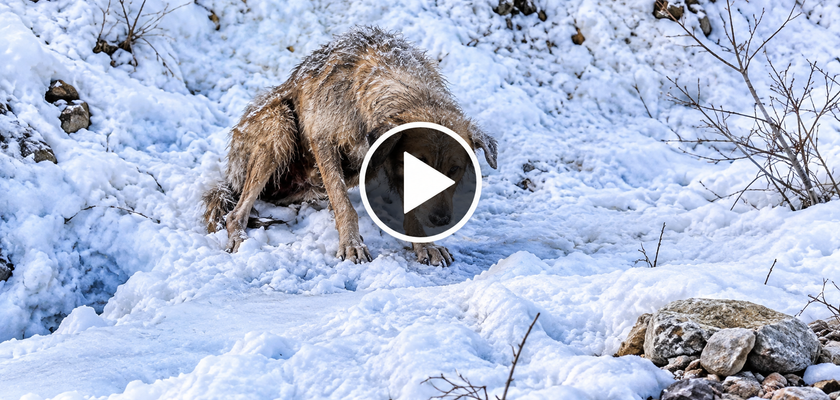
Winter can be beautiful, with snow-covered landscapes and peaceful surroundings, but for animals without a warm and secure place to rest, freezing conditions can become a serious challenge. A short video showing a soaked, exhausted-looking dog on an icy stretch of snow has captured a particularly emotional moment. With its wet fur, lowered head, and tired expression, the animal appears to be facing difficult conditions in an environment where warmth and shelter may be hard to find.
The footage begins with a wide view of a snowy outdoor area. Snow and ice cover the uneven ground, while rocks and small patches of exposed vegetation can be seen around the edges. A narrow area of icy water appears nearby, adding to the cold and harsh appearance of the surroundings.
In the middle of this winter landscape, a medium-to-large dog with gray-brown fur and a pale face is crouched close to the ground. Its coat appears heavily wet, with strands of fur clinging together. Snow and moisture cover parts of its body, making the dog look considerably colder than an animal resting in a dry, sheltered place.
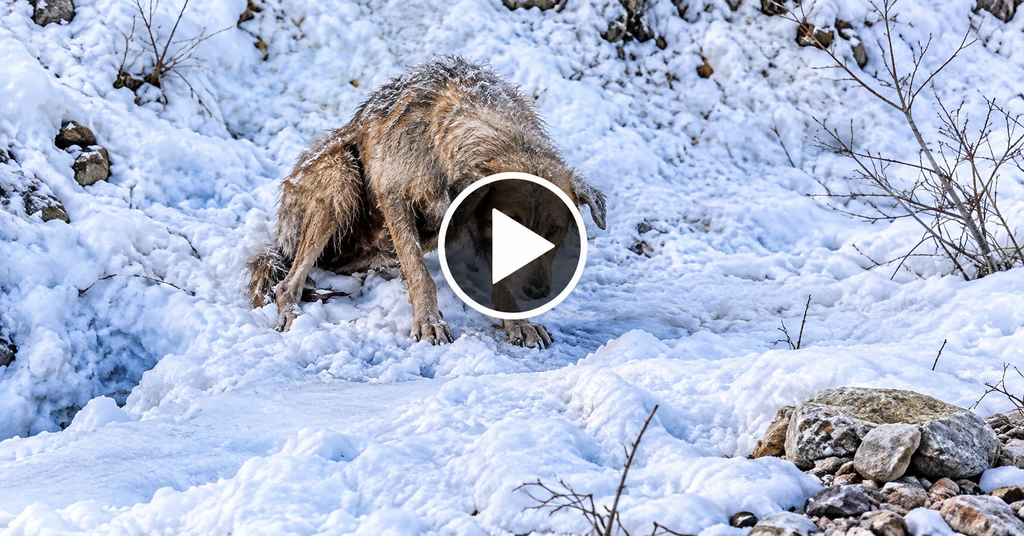
At first, the dog keeps its head lowered toward the snow. It appears to be sniffing or investigating the ground, moving its nose close to the icy surface. Its posture is low, and its movements are slow. The camera gradually approaches, bringing the animal into clearer view.
As the person filming gets closer, the dog’s face becomes more visible. It has dark eyes, a black nose, and a pale cream-colored muzzle that contrasts with the darker fur around its head and back. Its ears remain lowered, while its wet coat gives it a rough and disheveled appearance.
The dog eventually raises its head and looks directly toward the camera. For a brief moment, it remains still, seemingly observing the person nearby. Its expression is particularly striking because of the contrast between its dark eyes and the snow-covered surroundings. Although it is impossible to know what the animal is feeling from its expression alone, its tired-looking appearance naturally raises concern.
The camera captures the dog from several close angles. Its fur appears soaked, especially around the neck, shoulders, and back. Small patches of snow cling to the coat, while moisture is visible around its muzzle. The animal remains close to the icy ground, occasionally shifting its head as it looks around.
After remaining low for a moment, the dog begins to change position. It slowly lifts its body and appears to gather enough strength to sit upright. The movement is not particularly quick or energetic. Instead, the dog seems cautious, taking its time as it adjusts its legs on the slippery surface.
Once sitting, the animal faces the camera again. Its front legs are positioned beneath its body, while its wet fur hangs close to its sides. The dog looks toward the person filming, then briefly lowers its gaze. This quiet interaction becomes the emotional center of the short recording.
There is no clear explanation in the video for why the dog is alone in the snow or how long it has been exposed to the cold. It is also not possible to determine whether the animal is lost, living outdoors, or simply being filmed during a temporary stop in a snowy area. The footage does not show an owner, a rescue team, or any other person approaching to provide assistance.
Nevertheless, the dog’s visibly wet coat and the icy surroundings make its situation concerning. Cold weather can be particularly difficult for dogs when their fur becomes soaked. Wet coats provide less effective insulation, and exposure to low temperatures can increase the risk of dangerous heat loss.
Dogs have different levels of tolerance to winter conditions depending on their breed, age, body condition, health, and coat type. Some animals are naturally better adapted to cold weather, while others can become uncomfortable or develop cold-related problems much more quickly. Even dogs with thick coats are not automatically protected from every winter hazard, especially when they are wet or exposed to strong wind.
One of the most important concerns in such circumstances is hypothermia, a condition in which the body loses heat faster than it can produce it. Warning signs may include shivering, weakness, unusual tiredness, confusion, and difficulty moving normally. In severe cases, the condition can become life-threatening and requires urgent veterinary attention.
The dog’s slow movements in the video cannot establish that it is suffering from hypothermia or any particular medical condition. A short clip is not enough to make that diagnosis. However, its wet appearance and the freezing environment are good reasons for viewers to hope that it has access to a warm and protected place.
Another challenge is the icy ground itself. Walking or sitting on slippery snow can make movement difficult, especially for an animal that is already tired or uncomfortable. Sharp ice, hidden stones, and uneven surfaces may also cause injuries. If a dog has been outside for an extended period, it may need a careful examination to check its paws, skin, and overall condition.
As the recording continues, the dog remains seated for a short time, looking toward the camera. Its pale face stands out against the darker fur around its head. The animal appears quiet and watchful, with its body still covered in wet, clumped fur.
The camera then moves closer again, showing the top of the dog’s head and its back. From this angle, the thick but soaked coat is particularly noticeable. The animal lowers its head toward the snow once more, apparently returning its attention to the ground.
The scene offers a reminder that winter safety for pets requires more than simply having a thick coat. Dogs need access to dry shelter, fresh drinking water, suitable food, and a warm resting area. During severe weather, animals should not be left exposed to freezing temperatures for extended periods, especially if they are young, elderly, sick, or have become wet.
For anyone who encounters a dog in similar conditions, a calm and careful response is important. If the animal appears weak, confused, injured, or unable to move normally, contacting a veterinarian or local animal rescue organization is a sensible first step. Approaching gently can help avoid frightening an already vulnerable animal.
If it is safe to assist, moving the dog to a warm, dry, sheltered location may help protect it from further exposure. Wet fur can be dried carefully with towels, and the animal should be warmed gradually. Direct contact with very hot heating devices or sudden extreme heat should be avoided because it may cause additional harm. A veterinarian can determine whether further treatment is necessary.
The video also highlights the importance of responsible pet ownership during winter. Owners should check outdoor conditions regularly, provide appropriate shelter, and make sure their animals have a comfortable place to sleep. Dogs that spend time outside should still have access to protection from wind, snow, and freezing rain. Their behavior should also be monitored for signs of discomfort or illness.
For people living in areas that experience heavy snowfall, preparing for winter can make a significant difference. A dry insulated shelter, clean bedding, regular meals, and routine health checks are basic parts of responsible animal care. When temperatures become dangerously low, bringing pets indoors is often the safest option.
The dog in this recording appears to be alone during the moments shown, but the footage does not reveal its full circumstances. It does not establish whether the animal has been abandoned or whether someone is responsible for its care. Avoiding assumptions is important, particularly when a short video provides only a limited view of a much larger situation.
What viewers can clearly see is an animal standing and resting on icy ground with a heavily wet coat. It looks toward the camera, slowly changes position, and remains in the snowy environment until the clip ends. Those visible details are enough to make the scene memorable and to remind people that animals can be vulnerable when exposed to harsh weather.
Perhaps the most touching moment comes when the dog lifts its face and looks directly into the camera. For a brief second, the busy details of the snowy landscape seem to disappear, leaving only the animal’s quiet gaze. It is a simple moment, but one that encourages viewers to think about the needs of animals that may be struggling outside during winter.
Every dog deserves a safe place to rest, regardless of whether it has a home or is still waiting to be cared for. Warmth, food, clean water, and medical attention are not luxuries; they are essential parts of animal welfare. When people notice an animal in distress and respond responsibly, they can help prevent a difficult situation from becoming worse.
The recording ends without revealing what happens to the dog afterward. There is no confirmed rescue or explanation of its condition, leaving viewers to wonder whether it eventually found shelter from the cold. Hopefully, the animal was able to reach a dry and warm place where it could recover from the harsh conditions.
The image of the soaked dog sitting quietly on the snow is a powerful reminder that compassion should not disappear when the weather turns cold. Behind every animal that appears alone in a winter landscape is a life that deserves care and protection. Sometimes, simply noticing that an animal needs help can be the first step toward giving it a safer and brighter future.


