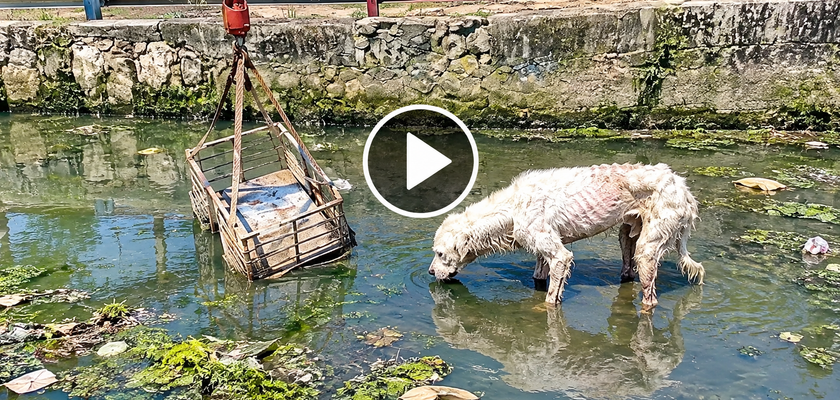
A concerning scene involving a white dog standing in a polluted canal has drawn attention to the challenges animals can face when they find themselves in unsafe surroundings. The dog appears to be standing in shallow, murky water near a suspended metal basket attached to a cable above the canal. Surrounded by scattered debris, algae, and dirty water, the animal’s situation raises an important question about how quickly an ordinary moment can become a potential danger for a vulnerable animal.
The short video captures the scene from an elevated viewpoint, looking down toward the canal below. A rough concrete and stone wall runs along one side, while a metal railing and roadside structure can be seen above it. The water beneath is dark and uneven, with patches of green growth and pieces of rubbish floating or resting near the surface.
At the center of the scene, a white dog stands in the shallow water. Its coat contrasts sharply with the dark surroundings, making it easy to notice even from a distance. The dog moves around the area, occasionally turning its head toward a metal basket hanging nearby.
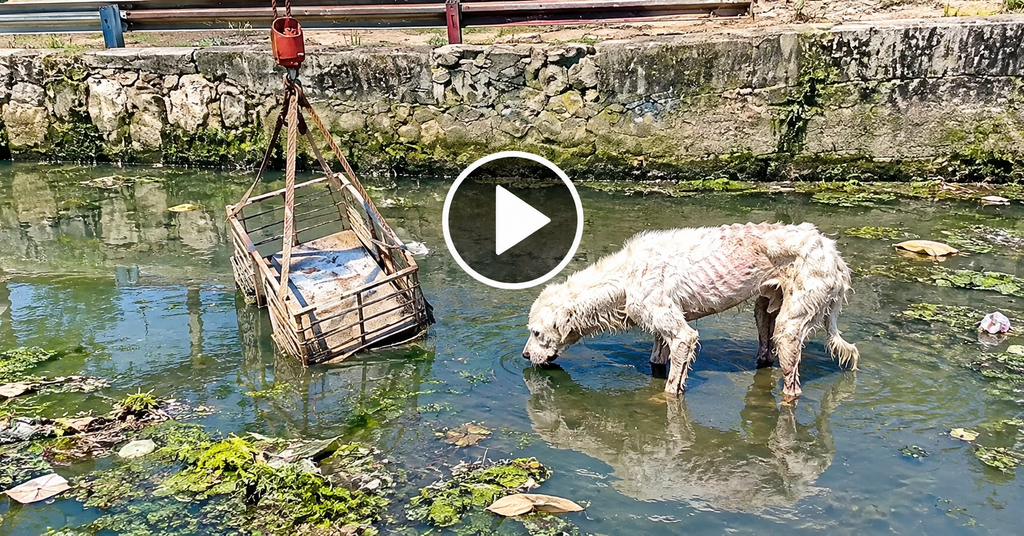
The basket appears to be suspended from a cable and positioned close to the water’s surface. Its metal frame is visible, and a lifting mechanism seems to connect it to the structure above. Although the video does not explain exactly why the basket is there, its presence suggests that someone may be using equipment to move objects or assist with work in the canal.
As the dog approaches the suspended basket, it seems curious about the object. It moves its head toward the frame and then shifts its position in the water. The animal’s movements are cautious but noticeable, as though it is trying to understand what is happening around it.
The surrounding environment makes the situation particularly concerning. Canals and drainage channels can contain hidden hazards, including sharp pieces of rubbish, slippery surfaces, uneven ground, and contaminated water. Even when the water looks shallow, an animal may struggle to climb out if the banks are steep or the surrounding concrete is slippery.
For a dog that has entered such an area, finding a safe way back to solid ground may not be easy. A narrow canal can limit the animal’s movement, while nearby objects and debris may make it difficult to identify a suitable exit. If the dog becomes frightened and begins moving unpredictably, the situation could become even more challenging.
The video does not reveal how the dog entered the canal or how long it had been there. It may have wandered down toward the water while searching for food or shelter, or it may have reached the area through an opening that was not visible from the camera’s position. Without additional information, it is impossible to know the exact circumstances behind the scene.
What viewers can clearly observe, however, is that the dog is standing in an environment that does not appear suitable for a prolonged stay. Dirty water and discarded materials can pose risks to animals, particularly those without regular care or access to clean drinking water. A dog exposed to such conditions may need assistance from people familiar with animal safety and rescue procedures.
The suspended basket adds another unusual detail to the footage. It is positioned close enough for the dog to approach and inspect, but the video does not show whether the animal is being guided toward it or whether the equipment is part of a rescue attempt. It is important not to assume that the basket is being used to lift the dog, since the short recording does not confirm its purpose.
If the basket is intended to assist with a rescue, careful coordination would be essential. A frightened animal may not understand how to enter an unfamiliar metal structure, especially when it is moving above the water. Helpers would need to make sure the basket is stable, positioned safely, and suitable for the dog’s size before attempting to use it.
Animal rescues in canals and drainage systems can require more than simply reaching down and lifting an animal. The walls may be steep, the ground may be slippery, and the water may hide obstacles that cannot be seen from above. Trained rescuers can assess these hazards and choose a method that reduces the risk of injury to both the animal and the people helping.
One of the most important lessons from situations like this is that people should avoid rushing into dangerous areas without proper equipment or experience. A well-meaning person who climbs down an unstable canal wall may also become trapped or injured. Contacting local rescue teams, animal welfare organizations, or emergency services when appropriate can provide a safer way to respond.
The dog’s presence also highlights the difficulties faced by stray animals in urban environments. Dogs without secure homes often move through streets, alleys, construction areas, and drainage channels in search of food or a place to rest. These spaces may offer temporary shelter, but they can also expose animals to traffic, pollution, extreme weather, and physical hazards.
Unlike people, dogs cannot easily understand the dangers created by human infrastructure. An open canal may look like an accessible path, and a pile of rubbish may seem like a possible source of food. When animals explore these places, they may unknowingly enter situations from which they cannot escape without help.
Communities can reduce these risks through simple preventive measures. Covering dangerous drainage openings, maintaining canal walls, removing accumulated rubbish, and keeping public areas clean can help protect both animals and people. Residents can also report injured or trapped animals rather than assuming someone else will eventually notice them.
The scene is a reminder that compassion often begins with paying attention. A person who notices an animal in difficulty can make an important difference by alerting others and seeking appropriate assistance. Even when the rescue itself requires specialized equipment, recognizing the problem is the first step toward helping.
It is also important to consider the dog’s health after any possible rescue. Contact with polluted water may leave dirt and harmful substances on its coat and skin. If the animal has been exposed for an extended period, a veterinary examination may help identify injuries, skin irritation, or other health concerns that are not immediately visible.
A safe recovery would involve moving the dog away from the canal, providing clean drinking water, and allowing it to rest in a secure environment. If the dog has no owner, a local animal rescue group or responsible caregiver may be able to help arrange food, shelter, and veterinary attention. These steps can turn a frightening experience into an opportunity for a better future.
Although the video is brief, it encourages viewers to think about the many animals living close to busy roads, waterways, and other potentially dangerous places. Some may be community dogs familiar to local residents, while others may be strays with no regular source of care. Whatever their background, they all depend on safe surroundings and the willingness of people to respond when they are in trouble.
The white dog standing in the murky water is a powerful image because it shows how vulnerable an animal can appear when surrounded by an environment it cannot control. The suspended metal basket may or may not be part of an effort to help, but its presence draws attention to the possibility that someone is taking action. What matters most is that the dog’s safety should remain the priority.
Hopefully, the animal will be guided out of the canal safely and given the care it needs. A clean, comfortable place to rest, proper food, fresh water, and a gentle human presence could make a tremendous difference after such an uncertain experience. If the dog is a stray, finding a responsible caregiver or rescue organization could offer it a chance to live somewhere much safer.
Every animal deserves protection from preventable dangers, regardless of whether it has a home or someone waiting for it. This short moment beside a polluted canal reminds us that kindness is not measured only by dramatic acts. Sometimes, it begins with noticing a vulnerable animal, taking its situation seriously, and making sure the right help arrives. With patience and compassion, a frightening situation can become the beginning of a safer and happier chapter.


