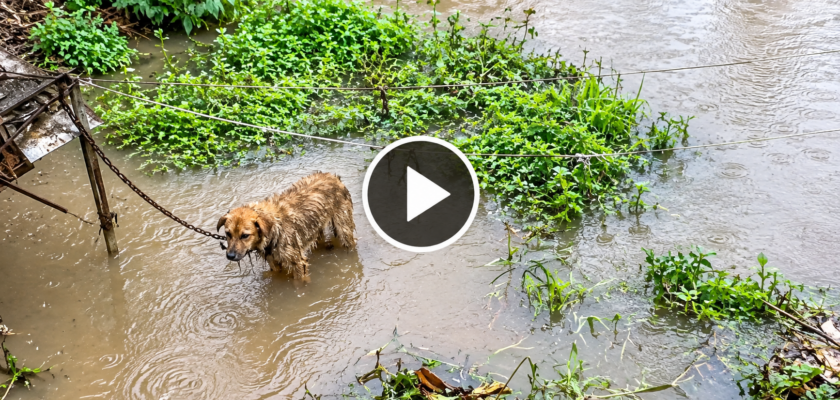
A heartbreaking scene has drawn attention to the vulnerability of animals during periods of heavy rain and flooding. A brown dog can be seen standing in muddy water, soaked from head to paws, with a heavy chain attached to its collar. Surrounded by water and vegetation, the animal appears unable to move freely, creating a troubling reminder that pets and stray animals can face serious dangers when their surroundings become flooded.
The short video begins with a view of a waterlogged outdoor area. Muddy water covers much of the ground, while patches of green plants and floating vegetation can be seen around the edges. The water appears to be moving gently in some places, and the surrounding landscape suggests that the area has experienced significant rainfall or flooding.
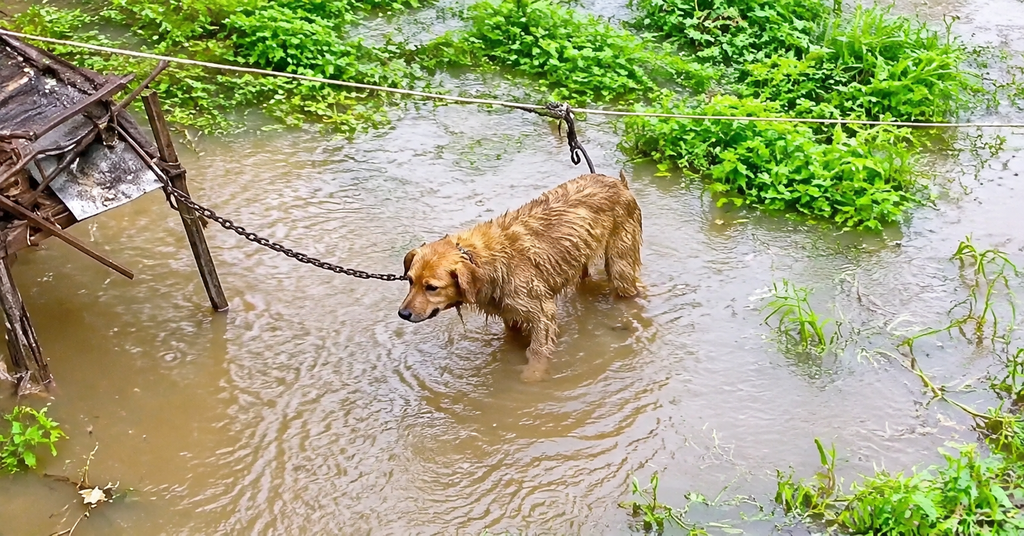
As the camera moves closer, a brown dog becomes clearly visible standing in the shallow water. Its fur is completely wet and appears darker than it might normally look. A chain is attached around its neck, extending toward something outside the camera’s view and limiting how far the dog can move.
The dog initially keeps its head lowered, seemingly focused on the water beneath it. It then raises its face and looks toward the person recording the video. Its wet ears hang down, and its expression appears tired and uncertain. For viewers, this brief moment can be difficult to watch because the animal seems to be waiting for someone to notice its situation.
The chain is one of the most concerning details in the footage. Although the video does not reveal where it is secured or how long the dog has been there, being tethered in a flooded area can create additional risks. If the water rises, the animal may have very little room to move toward higher ground or find a safer place to rest.
Flooding can turn familiar outdoor spaces into dangerous environments within a short period of time. Areas that are normally dry may become covered in muddy water, while drainage channels and nearby waterways can overflow. For animals that are kept outdoors, these changes can make it difficult to reach shelter, food, or clean drinking water.
A dog attached to a fixed chain may be especially vulnerable during such conditions. Unlike an animal that can move freely, a tethered dog depends on the length of its chain and the location of its attachment point. If water begins rising around it, even a few meters of movement may not be enough to reach a dry and secure area.
The dog in the video appears to be standing in water that reaches partway up its legs. It shifts its position and looks around, but the chain remains visible throughout the recording. Later, the dog lowers its head toward the water, apparently sniffing or drinking from the muddy surface. The footage does not establish whether clean drinking water or shelter is available nearby.
This detail highlights another challenge for animals during floods. When normal water sources become inaccessible, dogs may turn to puddles, drainage water, or other contaminated sources. Such water can contain dirt, waste, bacteria, and other substances that may cause illness. Providing fresh, clean drinking water is therefore an important part of protecting animals during severe weather.
The dog’s condition also raises questions about its access to shelter. Its coat is soaked, and there is no clear sign of a dry resting place within the visible area. Prolonged exposure to rain and cold conditions can cause discomfort and may contribute to health problems, particularly for animals that are already weak, young, elderly, or unwell.
For responsible pet owners, preparing for heavy rain should include making sure animals have a safe place above expected flood levels. Dogs that are normally kept outdoors should be moved to a secure indoor or elevated shelter before conditions become dangerous. Their chains or tethers should never prevent them from reaching safety, and they should have access to clean water, food, and a dry resting area.
In an emergency, leaving a dog tied in a flood-prone location can become life-threatening. A sudden rise in water may restrict the animal’s movement, while a chain can become caught on nearby objects or debris. Even if the water initially appears shallow, conditions can change quickly when heavy rain continues or nearby waterways overflow.
The situation also reminds communities that animal welfare should be considered as part of disaster preparedness. Flood warnings often focus on protecting people, homes, roads, and essential services, but pets and community animals also need attention. Local residents can help by identifying animals kept in vulnerable locations and notifying owners or rescue organizations when danger is approaching.
If someone encounters a chained dog in rising floodwater, the first priority should be to assess the danger and seek appropriate assistance. Attempting to enter deep or fast-moving water without proper training can put human life at risk. Contacting local emergency services, animal rescue groups, or experienced responders may be the safest way to arrange help.
When it is safe to approach, rescuers may need to check whether the chain is tangled, whether the dog can move freely, and whether the attachment point can be released without causing injury. A frightened animal may react unpredictably, especially when it is wet, cold, or stressed. Calm movements and careful handling can help prevent further distress.
After an animal has been moved to safety, its recovery should not be overlooked. It may need to be dried, warmed, offered clean drinking water, and examined for injuries or signs of illness. A veterinarian can assess possible problems caused by prolonged exposure to dirty water, including skin irritation, wounds, or infections.
Beyond the immediate danger, the video invites viewers to think about the responsibilities that come with keeping a dog. Providing food and a place to sleep is important, but responsible care also means protecting an animal when weather conditions become dangerous. Dogs depend on people to make decisions that they cannot make for themselves, particularly when they are restrained or confined.
The image of the dog looking toward the camera is especially powerful because it captures a brief moment of connection between an animal and the person observing it. The dog cannot explain whether it is frightened, uncomfortable, or simply confused by the unusual surroundings. However, its situation is enough to remind viewers that animals deserve attention and protection when they are exposed to danger.
There are also important lessons for neighborhoods that experience seasonal flooding. Residents can help by checking outdoor spaces before heavy rain, moving pets away from low-lying areas, securing gates, and ensuring that animals are not tied near canals or drainage systems. Community members can also share information about available animal rescue services so that help can be requested quickly when needed.
For people who regularly care for community dogs, simple preparations can make a meaningful difference. Providing an elevated shelter, keeping a supply of clean water, and arranging a safe place where animals can stay during storms may prevent avoidable suffering. These efforts do not need to be complicated, but they do require planning and compassion.
The short recording does not show what happened after the camera stopped filming. It does not confirm whether someone released the dog from its chain, moved it to dry ground, or arranged veterinary care. Nevertheless, the footage offers an important opportunity to raise awareness about the risks faced by animals during floods, especially those whose movement is restricted.
Hopefully, the dog will be moved to a safe and dry place where it can rest without fear. With proper care, clean water, and a warm shelter, it may recover from the difficult conditions shown in the video. If it is still being cared for outdoors, this incident could also serve as a reminder to provide a safer arrangement before the next heavy rainfall.
Every dog deserves more than a chain and a place to stand. It deserves protection from dangerous weather, enough freedom to reach safety, and someone who recognizes when it needs help. The sight of this soaked dog standing in muddy floodwater reminds us that compassion should extend to every vulnerable animal. Sometimes, a simple decision to check on a pet, loosen a dangerous tether, or call for help can make the difference between continued suffering and a chance for a much safer life.


