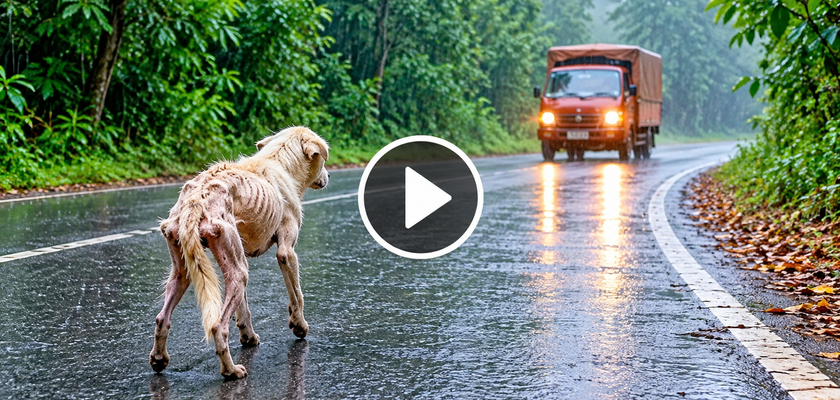
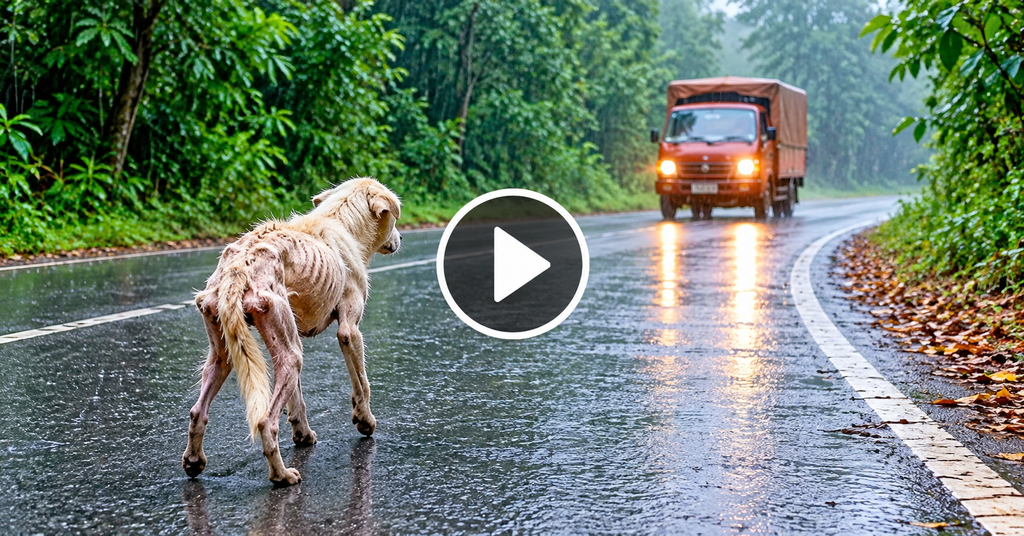
A heartbreaking sight on a quiet forest road has drawn attention to the struggles of vulnerable stray animals. A severely thin white dog can be seen standing on a wet asphalt road surrounded by dense green trees, looking exhausted and uncertain as a truck approaches from a distance. With its ribs clearly visible beneath its coat and its fragile body exposed to passing traffic, the dog appears to be facing a difficult situation that no animal should have to endure alone.
The video begins with a view of a winding road cutting through a lush, wooded landscape. The road surface is dark and wet, suggesting that rain has recently fallen or that the area is experiencing damp weather. Tall trees and thick vegetation line both sides, creating a beautiful natural setting that contrasts sharply with the vulnerable animal standing in the middle of the roadway.
At first, the white dog is seen from behind, facing the approaching vehicle. Its thin legs support a body that appears noticeably underweight, while its head remains lowered slightly as it watches the road ahead. A small truck can be seen coming around the bend, gradually getting closer to the animal.
The dog does not appear to move away immediately. Instead, it remains near the roadway and occasionally shifts its position. As the vehicle approaches, the situation becomes increasingly concerning because a weak or frightened animal may not react quickly enough to avoid danger.
The camera then moves closer, revealing the dog’s condition in greater detail. Its coat looks dirty and uneven, and its ribs and hip bones are visibly prominent. The animal’s body appears extremely lean, raising concerns that it may have been struggling to find enough food or may have experienced a prolonged period without proper care.
Its face is perhaps the most memorable part of the footage. The dog has drooping ears, tired-looking eyes, and a quiet expression as it turns toward the camera. For a brief moment, it looks directly at the person recording, creating an emotional connection that makes viewers wonder what kind of life brought it to this lonely road.
Although the video does not explain the dog’s background, its physical condition suggests that it may need attention and veterinary care. Severe thinness in dogs can have many possible causes, including inadequate nutrition, illness, parasites, or other underlying health problems. Only a veterinary examination could determine what is affecting this particular animal.
The location adds another layer of concern. A forest road may appear peaceful because it is surrounded by trees and far from busy city streets, but passing vehicles can still create serious risks for animals. Drivers approaching a bend may have limited visibility, and a dog standing on wet asphalt may struggle to move quickly if it becomes frightened.
Rainy conditions can make the situation even more dangerous. Wet roads reduce traction for vehicles, while water on the surface may make it harder for an animal to run or maintain its footing. A dog that is already weak may have even less ability to escape an approaching vehicle.
The footage does not show a collision, and it would be unfair to assume that the dog was struck. What it does show is an animal standing dangerously close to moving traffic while appearing physically vulnerable. That alone is enough to remind viewers how important it is to respond carefully when a stray animal is found on a road.
For dogs living without a stable home, searching for food and shelter can mean traveling through unfamiliar areas. They may follow the smell of food, move between settlements, or seek protection beneath trees and roadside structures. During these journeys, they can become exposed to traffic, bad weather, hunger, and other dangers.
A dog that has become severely underweight may also have difficulty judging risks or reacting quickly. Lack of energy can affect its ability to walk long distances, avoid obstacles, and respond to sudden sounds. If the animal is also frightened or unwell, even a relatively quiet road can become a dangerous place.
The dog’s expression in the final moments of the video is especially touching. It lowers its head and looks toward the ground before glancing back at the camera. While we cannot know exactly what the dog is feeling, its tired appearance encourages viewers to think about the importance of noticing animals that may be suffering silently.
Sometimes, a single encounter can become the beginning of a better outcome for a stray dog. A driver who notices an animal on the road may be able to stop at a safe distance, alert other motorists, and contact a local animal rescue group. However, stopping in a dangerous location or approaching suddenly can create additional risks, so any assistance should be planned carefully.
If someone encounters a dog in this condition, keeping the road safe should be the first priority. Drivers should slow down, avoid sudden movements, and make sure the animal is not forced into the path of oncoming traffic. If it is safe to do so, experienced rescuers may be able to guide the dog away from the roadway and toward a secure location.
Once the dog is out of immediate danger, a veterinary examination would be an important next step. A severely underweight animal may require a carefully managed feeding plan rather than a sudden large meal. A veterinarian can assess its weight, hydration, general condition, and possible medical problems before recommending appropriate treatment.
The dog may also need a quiet place where it can rest without being exposed to rain, cold temperatures, or passing vehicles. Fresh water, suitable nutrition, and gentle care can help support its recovery. If the animal has no owner, a rescue organization or responsible foster caregiver may be able to help arrange longer-term shelter and medical attention.
This situation also highlights the importance of community awareness. People living near forest roads, rural settlements, and isolated highways may occasionally encounter abandoned or wandering animals. Reporting these cases to local animal welfare groups can help connect vulnerable dogs with people who have the knowledge and resources to assist.
There are many ways communities can help prevent animals from reaching such dangerous conditions. Supporting responsible pet ownership, encouraging sterilization programs, promoting adoption, and ensuring that abandoned animals receive attention can all contribute to better animal welfare. These efforts may seem small individually, but together they can reduce the number of dogs left to survive alone.
It is also worth remembering that a stray dog should not be judged by its appearance or condition. An animal that looks dirty, thin, or frightened may have experienced circumstances beyond its control. Rather than ignoring it, people can show compassion by seeking appropriate help and treating it with patience and respect.
The white dog in this video deserves more than a brief moment of sympathy from viewers. It deserves the chance to leave the dangerous roadside behind and receive the care it may urgently need. Its condition is a reminder that behind every stray animal is a living creature that can experience hunger, discomfort, fear, and the need for protection.
Although the recording ends without showing what happens next, there is still room to hope for a positive outcome. Perhaps someone will notice the dog’s condition, help it reach safety, and arrange the medical attention and nourishment it needs. With time, patience, and responsible care, even a very weak dog may have an opportunity to regain strength and experience a more comfortable life.
Imagine this same dog several weeks or months later, resting on a soft blanket in a safe place, with a full bowl of clean water nearby and enough food to help it recover. Instead of standing alone on a wet road, it could have people watching over it and a quiet space where it no longer needs to worry about passing vehicles. That hopeful possibility is why every act of kindness toward vulnerable animals matters.
No dog should have to stand alone on a rainy road while struggling to survive. Every animal deserves safety, nourishment, and the chance to live without constant fear. The image of this fragile white dog reminds us that compassion begins when someone chooses to notice a life in need—and takes the first careful step toward helping it find a brighter future.


